TV Résistance
Connexion
History on YouTube
(14 506 abonnés 3 251 390 vues 0 Commentaires ) note : 1
Crée le 2010-07-29
My name is Alan and ever since my grandmother bought me the Ladybird book of the Kings and Queens of England I have been very interested in history. My aim here is to present not only some documentaries but also my own material. As a researcher I am fortunate in two ways. The first is that I know various languages which gives me access to far more materials and original documentation and the second is that as a digital nomad living in a motorhome and travelling around, I can get to those places which interest me. Whereas I will publish materials from many historical periods, my main interest is in the twentieth century and in particular the Second World War. I believe that it is very important for a serious historian to look at all sources and maintain neutrality. Opinions should always be based on facts, and facts should never be changed or altered to suit opinions. Please also see my facebook history group : https://www.facebook.com/historysite/
| |
Page 1 | Suivant
50 Vidéos en Anglais

History on YouTube | (Y) | (Ajax)
The Polish palace as big as Versailles. Krzyżtopór. | (Y) |
This Polish palace was built at the same time as Versailles and is roughly the same size. However, unlike the French palace, this palace was built by a private citizen and is today unfortunately in ruins. Krzyżtopór is a castle, or more strictly speaking a palace, located in the village of Ujazd in southern Poland. It was built by a Polish nobleman, Krzysztof Ossoliński and completed in 1644. The tragedy is that Krzysztof Ossoliński died one year after it was completed and within eleven years the castle was destroyed and since then has been the ruin that we can see today although as its structure is relatively well-preserved, its size is still impressive and it does not take much to imagine what its splendor would have been. Construction of the castle may have started around 1627 (or before) and was built in three stages. It was built in a fortified palace style that one can see in Italy. Construction cost 30 million złoty which was then an astronomical sum. It was destroyed during the Swedish invasion of Poland in 1655. Further damage was done during warfare in 1770. Krzysztof Ossoliński believed in magic and symbolism, there are 365 windows, 52 rooms and 12 what we would today call suites. The total size of the complex is 1.3 hectares; the length of perimeter walls is 700 meters; the total area of all interior rooms is around 70 000 square meters. Krzyżtopór was furnished with amenities that were rarely seen in the 17th century, such as ventilation, heating and plumbing that provided all the rooms with fresh water. There was also a system of lifts for carrying food from the kitchens upstairs. It is said that there was an aquarium in the ceiling of one of the ballroons. I was fortunate enough to stay the night there, parked in the car park. As an overnight stay, it was very quiet! https://www.facebook.com/historysite/ Production of independent researched history is time consuming and expensive. Please consider supporting me on Patreon. https://www.patreon.com/alanheath
Polish palace | polish palace nail art | polish presidential palace | caravan palace polish cover | putin palace polish | polish palace | Polish presedential palace

History on YouTube | (Y) | (Ajax)
Jan Karski, Polish resistance hero born 24 June 1914 #shorts | (Y) | | |
Polish resistance hero Jan Karski may have been born on 24 June 1914 – although his date of birth is not known for sure. Before World War 2, Karski was a reserve cavalry officer and was briefly based at what was to become the Auschwitz concentration camp, although it was then a military base. He was captured by the Red Army near Tarnopol in September 1939 and escaped from the train. He then operated in the resistance. Whilst on a courier mission, he was captured again in Slovakia and escaped from a hospital. As a courier he visited the Warsaw ghetto in 1942. In his book he described a visit to the Bełżec death camp although it was probably a depot near Izbica railway station. Later he made it to London and then to Washington. He attempted to warn western governments of the Holocaust but was met with disbelief in the USA, something he regretted for the rest of his life. YouTube has introduced a feature called #Shorts which is clearly designed to compete with TikTok. If you are watching on a mobile you will see #Shorts come up but not if you are watching on a computer. I don't think that this is what my audience wants to see, but on the off chance that it might be, I am going to give it a try by doing previews of videos that will come up in the future. #Shorts are in portrait mode and under 60 seconds. My history channel is based on my own research and generally comes from places I have visited and or original research. I live in a motorhome and as such spend most of my time travelling between Poland, Germany and Italy which is why there is a tendency to produce material from these countries, and sometimes material that is not available in English. My speciality is in World War Two, and in particular, the Holocaust although as you can see, I have opinions on a lot of other historical subjects too. https://www.facebook.com/historysite/ Production of independent researched history is time consuming and expensive. Please consider supporting me on Patreon. https://www.patreon.com/alanheath
jan karski | History on YouTube | history | World War 2 | World War 1 | Nazi Germany | Soviet Union | Poland | Central Europe | Holocaust | jan karski documentary | jan karski shoah | jan karski roosevelt | jan karski wywiad | jan karski movie | jan karski way extension | jan karski felix frankfurter | jan karski biography | jan karski meeting with roosevelt | jan karski story of a secret state | jan karski play | jan karski warsaw ghetto | jan karski po polsku | Jan karski documenatry

History on YouTube | (Y) | (Ajax)
SS Heimwehr Danzig founded 20 June 1939 #history #Shorts | (Y) | | |
The Heimwehr Danzig did not start life as the Heimwehr Danzig but was created by Heinrich Himmler in October 1938 and recruits initially came from the Adlersheim district of Berlin. At that time it was the III Batalion 4. Company of the SS-Totenkopfstandarte Ostmark. In charge was SS-Obersturmbannführer Hans-Friedemann Goetze. In January 1939 the Nazi controlled Senate of the Free City of Danzig voted to supplement its defence forces and launched a recruiting campaign which attracted some 3,000 men, approximately 500 of whom were accepted. They were to later form the nucleus of the ss Heimwehr Danzig. On 20 June 1939, the III Batalion of the aforementioned 4. Company of the SS-Totenkopfstandarte Ostmark was smuggled into the Free State from Koenigsburg and Elbling with the men in civilian clothes. The unit got the name SS Heimwehr Danzig in July 1939 and became part of the SS-Totenkopfstandarte Ostmark with units stationed in Bischofsbergkaserne barracks and a school in Danzig. After receiving anti tank and anti aircraft unit reinforcements from Germany it reached full strength of around 1,550 soldiers on 18 August 1939 when it openly paraded in the Free City saluted by Gauleiter Albert Forster as can be seen in this weekly newsreel originally first broadcast on 23 August 1939. On 1 September 1939 in the aggression against Poland, most of the unit was sent south to Tczew in the attempt to capture the Vistula bridges. However units also attacked the Polish Post Office in the Free City. The defenders of the Polish Post Office, armed only with armed with pistols, rifles, light machine guns and grenades held out for 15 hours even though the attackers were able to call on ADGZ armoured cars as well as 75mm and 105mm artillery. Some men participated in the attack on the Westerplatte where four were killed. The unit arrived too late in Tczew to take part in the fighting with contradictory orders being sent, recalling them to the centre of Danzig in order to take part in the attack on the Post Office. It held a victory march in the now Nazi German occupied Danzig on 3 September 1939. Later it took part in the battle for Gdynia before moving in a southerly direction. It participated in a number of crimes, the most serious being on 8 September 1939 when between 33 and 130 people living in the village of Książki were murdered. The unit was disbanded on 29 September 1939 and the following day it was incorporated into the 3rd SS Panzer Division Totenkopf, forming the cadre of its artillery regiment. The commanding officer Goetze was killed in action aged 42 near Le Paradis in France on 27 May 1940, the death of whom was followed by the murder of British POWs.
Heimwehr Danzig | Heimwehr | Danzig | Gdańsk | Free City | 1939 | National Socialist | WW2 | Albert Forster | Ss heimwehr danzig | ww2 documentary 2020
History on YouTube | (Y) | (Ajax)
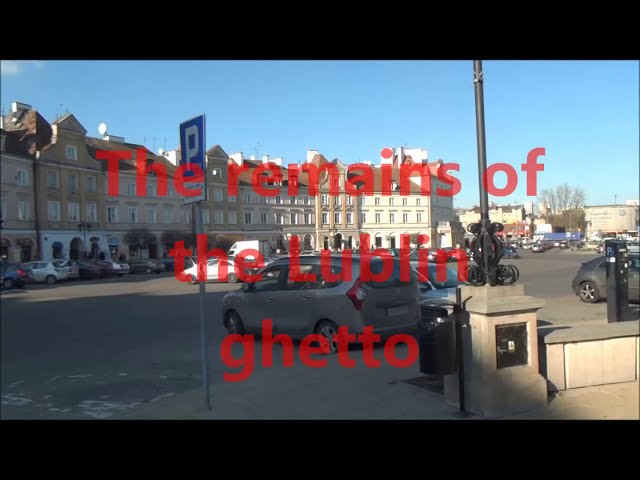
The remains of the Lublin ghetto part 2 | (Y) | | |
In 1939 Lublin had a population of around 120,000 people, one third of which were Jewish. The Nazis captured Lublin on 18 September 1939. Whilst still under military occupation, persecution began. In December 1939 a Judenrat (Jewish Council) was established with 24 members. The head was Henryk Bekker, an engineer who had been a local politician before the war. I have never come across any negative references to Bekker. He was murdered in Bełżec on 30 March 1942. His deputy was Marek Alten who was a lawyer from the region of Tarnów who had been an officer in the Austro-Hungarian army in WW1. He seems to have believed that he could talk to the Germans as equals, particularly if they came from Austria. Within time however it seems as though power went to his head. After the deportations to Bełżec, he became head of the Judenrat and was shot in the ghetto of Majdan Tatarski on 9 November 1942. The Nazis had a plan of making the Lublin district into a Judenreservat (Jewish settlement area or literally reserve). This policy was discontinued in 1940 after thousands of people from Germany and Austria above all had been brought to small ghettos in the area. Later the Nazis closed some of the smaller ghettos and sent people to Lublin or other ghettos. The Lublin ghetto as such was set up in March 1941. Even after it was set up, some people who worked for the Nazi authorities were allowed to stay outside the ghetto. The ghetto was formed in the streets around the castle, part of the Old Town and several streets to the north towards where the Yeshiva and Old Jewish cemetery still remain. The ghetto was not enclosed like at Warsaw, Kraków or Łódż. There were some temporary barbed wire entanglements erected, however for much of the time it was in existence, Jews could live on one side of the street and other people on the other. People died of starvation in the ghetto but not to the extent that this happened elsewhere as it was possible to bring food into the ghetto. An article in the Berliner Tagblatt of December 1940 had a series of photographs showing people being arrested for trading in foodstuffs. The reason why people did not escape is clear. They had no documents - where could they go and how would they procure food and shelter? In the late winter of 1942 the Nazis divided the ghetto in part A for those not working and B which is in the upper part which still survives for those working for the authorities. Thus all the people earmarked for deportation already found themselves in the lower part of the ghetto. On 16 March 1942, SS-Hauptsturmführer Hermann Höfle informed representatives of Nazi institutions in Lublin that all unemployed Jews would be deported to the last station in Lublin district - a place called Bełżec. The employed would be deported to another ghetto around 3km distant at Majdan Tatarski and from there they would be accommodated in Majdanek. At 22:00 on that day the ghetto was surrounded by SS and Trawniki men. A search light was set up and people forced to attend a roll call. Some, mainly the elderly and ill, were murdered. At midnight Hermann Worthoff from the Lublin Gestapo told the Judenrat that 1,500 people from the lower ghetto would be taken to the east to work and could take only 15 kg of luggage with them. Those chosen for the journey on this night and every night were put in the Great Synagogue and then marched around 3km to the Umschlagplatz on the periphery of the town. On 17 March 1942 these people became the first victims of the Bełżec death camp. Around 1,000 - 1,500 people were taken to Bełżec daily until 14 April 1942. Some people were shot in the Niemce Forest to the north of Lublin. On 14 April 1942 there were still around 7,000 people in the ghetto, many in hiding. In one of my films you can see the cellars which were uncovered by a building owner. To solve this problem, the Nazis moved everyone to the ghetto in Majdan Tatarski. The Nazis introduced a J Ausweis for workers (but not their families) as part of the deportation process. On 22 April 1942 they gathered the population in the Po Farze Square. People were forced to kneel and hold their papers up. Those that did not have the correct papers were taken away and murdered. https://www.facebook.com/historysite/ Production of independent researched history is time consuming and expensive. Please consider supporting me on Patreon. https://www.patreon.com/alanheath

History on YouTube | (Y) | (Ajax)
The remains of the Lublin ghetto part 1 | (Y) | | |
In these videos I show what the former Lublin ghetto looked like in 2014 and tell you some of the things that happened in the places you can see in this video. https://www.facebook.com/historysite/ Production of independent researched history is time consuming and expensive. Please consider supporting me on Patreon. https://www.patreon.com/alanheath
Lublin ghetto | Lublin | Poland | nazi germany | occupied poland | Holocaust

History on YouTube | (Y) | (Ajax)
The first Nazi camp at Belzec ( Bełżec ) | (Y) | | |
This film shows the barracks from the first Nazi camp which was built at Belzec ( Bełżec ). The building appears to be empty now or may be in use as a store. Bełżec is of course noted for being the second Nazi death camp which started the mass killing of the Jewish population of Lublin in March 1942. Before that, it was the location of a slave labour camp which is what we see here in this video. After the Nazi and Soviet occupation of Poland, either Eichmann or Himmler came up with a plan to create a 'reservation' for Jews measuring up to 1,000km2 in the area of Nisko which is located to the south of Lublin. As early as 18 October 1939, people were dumped here and told to get on with it. The following day Himmler ordered a stop to it, possibly as he wanted to concentrate on finding homes for German settlers in West Prussia, Wielkopolska and Silesia, areas that had been annexed to the Third Reich and needed to get rid of the non German population there first. Nontheless the deportations of Jews continued and we can see in the Luxemburger Wort of 12 November and the British paper The Times of 16 December 1939 that 45,000 Jews had been deported there. Possibly both papers used the same source. According to the Luxemburger Wort : "Sometimes trains drive on for forty kilometres beyond Lublin and halt in the open country, where the Jews alight with their luggage and have to find themselves primitive accommodation in the surrounding villages." Heydrich reported n 30 January 1940 that 78,000 Jews had been deported to the Lublin area from Germany, Austria and Czechoslovakia and that 400,000 would be taken there that year. No care or any type was available to the deportees and many died. Part of the deportation plan however did include slave labour camps (Zwangsarbeiterlager or ZAL) which were to work on defences along the new Nazi-Soviet border. Part of this was a huge ditch called the Burggraben. Although the military said that it had no use whatsoever, the SS pressed on with it. The initial plan was for four large camps, however no funding was available for it when governor Hans Frank refused to finance such a large and useless project. Odilo Globocnik opted for various small camps which could be set up at next to no cost as the prisoners would be doing the labour free of charge and what little food they needed could be obtained at minimal cost either from the victims themselves or locals. As they were not kept in normal accommodation, no costs were involved here. The prisoners could be kept in barns, storehouses, outhouses or even without cover. The building we see here may well have been a store before the war and has no doubt been improved since the war. Diseases were rampant, prisoners also could die of cold or starvation. Sometimes prisoners were able to escape to the Soviet zone with Red Army troops often helping them to do so. On 23 March 1940 the Nisko plan was scrapped but the Nazis still continued with their racial theory that 'Jews must work.' People were sent to camps like Bełżec from as far away as Warsaw. Many failed to return. In Warsaw large sums of money could be paid to avoid being sent there. By the end of 1940 the Wehrmacht tried to put a stop to this ridiculous waste of resources. Some camps were closed but Hmmler managed to keep it alive and ordered Odilio Globocnik to finish the job. Sometime in the autumn of 1941 the Nazis decided that they would murder all the Jews in Europe. There was already a strong military presence in the former border town of Bełżec and the death camp was located around 3km from the site of this camp. The building is today in private hands. In a nearby copse, next to the railway line, there are memorials to the people who were murdered there. https://www.youtube.com/watch?v=1nyItPsj1iU&list=PL76F1B78B13780CAD SEE MY HISTORY PAGE ON FACEBOOK : www.facebook.com/HistorySite See playlist on Bełżec : https://www.youtube.com/watch?v=1nyItPsj1iU&list=PL76F1B78B13780CAD
Belzec | belzec pronunciation | belzec memorial | belzec black metal | belzec sobibor and treblinka | belzecue | belzec rudolf reder | belzec peru | belzec full album | belzec the infernal southern call | belzec oboz zaglady | relax belzec | vernichtungslager belzec | belzec pronounciation | belzec sobibor adn treblinka | belzec teh infernal soutehrn call | Belzec the infernal sourthern call

History on YouTube | (Y) | (Ajax)
Warsaw Ghetto, 13 June 1941. Archival film | (Y) | | |
Archival footage, poor quality from original recording, taken inside the Warsaw ghetto on 13 June 1941, shot by a German soldier with an amateur camera. Notice how much clothing people are wearing despite the heat. This is a sign of starvation, one symptom of which is feeling cold much more quickly than usual. Bear in mind that the ghetto has been closed on since the previous November, the people here are largely without a source of income, many would be homeless and are dying. I don't know how the soldier managed to get into the ghetto as normally this would have been off bounds without a pass. https://www.facebook.com/historysite/ Production of independent researched history is time consuming and expensive. Please consider supporting me on Patreon. https://www.patreon.com/alanheath
Warsaw Ghetto | warsaw ghetto uprising 1943 | warsaw ghetto then and now | warsaw ghetto nitzer ebb | warsaw ghetto uprising testimony clips | warsaw ghetto today | warsaw ghetto survivor | warsaw ghetto tour | warsaw ghetto grad - the 1943 uprising | warsaw ghetto life | warsaw ghetto grad - the 1943 uprising (episode 3) | warsaw ghetto uprising summary | warsaw ghetto mark felton | warsaw ghetto song | warsaw ghetto history channel | warsaw ghetto hten and now | Warsaw ghetto hen and now

History on YouTube | (Y) | (Ajax)
Abandoned Jewish cemetery at Brzeziny, Poland | (Y) | | |
A Jewish community existed in Brzeziny since at least the middle of the sixteenth century. Brzeziny is today located in the centre of Poland, close to Łódź, it was once an important town in its own right but in the twentieth century was completely overshadowed by its neighbour which is now almost twenty times larger. The Jewish cemetery in Brzeziny was destroyed by the Nazis then the site was used for construction materials, particularly sand resulting in the hill it was built upon being removed. Very few stones are still present, however many have been saved and are now in storage with the view of making a lapidarium from them, assuming that agreement can be reached with the management of the Jewish religious community in Warsaw. My history channel is based on my own research and generally comes from places I have visited and or original research. I live in a motorhome and as such spend most of my time travelling between Poland, Germany and Italy which is why there is a tendency to produce material from these countries, and sometimes material that is not available in English. My speciality is in World War Two, and in particular, the Holocaust although as you can see, I have opinions on a lot of other historical subjects too. https://www.facebook.com/historysite/ Production of independent researched history is time consuming and expensive. Please consider supporting me on Patreon. https://www.patreon.com/alanheath
Brzeziny | Jewish | cemetery | Poland | abandoned cemetery | History on YouTube | history

History on YouTube | (Y) | (Ajax)
Abandoned Protestant cemetery at Brzeziny, Poland | (Y) | | |
This video shows the abandoned Protestant cemetery at Brzeziny, Poland. Abandoned but not uncared for as a group of volunteers have restored it so that it can be visited not only by the families of those buried here but also by the descendants of their former neighbours. A gentleman in Hamburg contributed to planting lime trees in the cemetery (something I omitted to mention in the video). The cemetery was also used for burials during WW2 as the military hospital was nearby. My history channel is based on my own research and generally comes from places I have visited and or original research. I live in a motorhome and as such spend most of my time travelling between Poland, Germany and Italy which is why there is a tendency to produce material from these countries, and sometimes material that is not available in English. My speciality is in World War Two, and in particular, the Holocaust although as you can see, I have opinions on a lot of other historical subjects too. https://www.facebook.com/historysite/ Production of independent researched history is time consuming and expensive. Please consider supporting me on Patreon. https://www.patreon.com/alanheath
Brzeziny | Łódź | Poland | History on YouTube | history | Central Europe | cemetery | Protestant

History on YouTube | (Y) | (Ajax)
The legend of General Karl Litzmann, the Lion of Brzeziny | (Y) | | |
In April 1940, the Polish industrial city of Łódź was given a name change by the Nazi occupiers. It became Litzmannstadt, as we can see from this newspaper of 12 April 1940. The Nazis gave German names to many places but usually it was just a German form of a Polish or other name. Łódź already had a German form, it was Lodsch. The city was renamed Litzmannstadt after General Litzmann who had captured Łódź in the first world war. Karl Litzmann was born on 22 January 1850 in Neuglobsow. On 1 April 1867 he joined the Prussian army in Berlin as an officer cadet and was commissioned second lieutenant on 9 August 1868. He participated in the Franco Prussian war of 1870 – 1871, during which he was awarded the Iron Cross. He was promoted Leuitenant General in 1901. On 12 September 1901 Karl Litzmann replaced Leuitenant General Georg von Rechenberg to become the head of the Prussian War Academy. In this role, he had arguments with the General Staff which led to him receiving early retirement. He was then 55 years old. However he was still on the reserve and when the First World War broke out, Litzmann was recalled and entrusted with command of the 3rd Guards Division on 18 October 1914. The Third Guards Division had already fought in the west and was one of those units transferred to the east at the end of August 1914 thus weakening the Schlieffen Plan. Litzmann thus took charge of the unit just before the battle of Łódź and it was here that he made a name for himself. German troops advanced too quickly and were surrounded by the Russian army at Brzeziny to the north east of Łódź. A disaster loomed with at least 8,000 Germans caught in a pocket. The Russian Army, expecting a large bag of prisoners, not only from Brzeziny but also in the continuing attacks, had 60 trains waiting between Skierniewice and Warsaw to take them into captivity. Litzmann probably was not the greatest general in the German army. He argued with his more cautious superior, Reinhard von Scheffer-Boyadel. Litzmann was more reckless and he was prepared to take chances. He risked all his troops on a frontal attack and luck had it that this was the point where the Russian strength was weakest and lacked reserves. Advancing in temperatures of around minus 11 C, Litzmann led his troops through the forest of Gałkówek which not only saved those who were surrounded but also led to the fall of Łódź two weeks later. This is the point where he led his troops across this railway line between Łódź and Koluszki. And this is how it appeared at the time, in this heroic illustration. In this painting we can see him leading his troops sword in hand. That is the legend. The truth is that he was then 65, ill and did not carry a sword. However it is the stuff of legend and how legends are born. For this action, he was awarded the Pour le Mérite on 29 November 1914 and given the honorary title “The Lion of Brzeziny”. Shocked by the German defeat in 1918 and the peace conditions, Litzmann rejected the republic and became involved with nationalist politics. In his memoirs (published in 1927 and 1928) he declared that the parliamentary system had failed. A national rebirth requires a return to the “Bismarckian spirit”: a new leader, who has not yet appeared, will save the German people from their misery and restore the monarchy. Karl Litzmann joined the NSDAP in 1929. He had previously joined the SA. He put his reputation as a general of the world war in the service of the party and appeared as a campaign speaker. In 1932 he was elected to the Prussian state parliament, which he opened as senior president. With the dissolution of the state parliament in October 1933, his mandate expired. In the Reichstag election in November 1932, the last free elections of the Weimar Republic, he was elected to the Reichstag and was allowed to open it as its most senior member, by then he was 82. In his speech of 6 December 1932, he accused his former commanding officer and now Reich President, Paul von Hindenburg, of "not being clear about the situation in Germany" and called for Hitler to be appointed Chancellor. From July 1933 he was a member of the Prussian State Council appointed by Hermann Göring. Litzmann was devoted to Hitler. On 2 July 1934, immediately after the Night of the Long Knives, he stood by Hitler and spoke on his behalf. Litzmann died in 1936. He was not buried in the Tannenberg Memorial as might have been expected but nonetheless his funeral in Neuglobsow was staged as a state event. After the annexation of the Wartheland, the former Polish cities of Łódź and Brzeziny were given German names in honor of Karl Litzmann. It seems as though Brzeziny was originally to be named Litzmannstadt although a commission went there and decided it was not good enough to bear the name of the general. Therefore Brzeziny became Lowenstadt – after the Lion of Brzeziny. Both reverted to their original names after the end of the occupation.
General Karl Litzmann | Karl Litzmann | Litzmann | Łódź | Lodsch | Litzmannstadt | Brzeziny | Lowenstadt

History on YouTube | (Y) | (Ajax)
Election in the Free City of Gdańsk : 28 May 1933 | (Y) | | |
After the Free City of Gdańsk was created in the aftermath of World War One, a mini state was created with its own parliament and other functions associated with that of a government. Various elections took place in the 1920s and 1930s with different political parties competing for 72 seats in the Volkstag. The parties in the Volkstag largely represented the same as could be found in Germany. In the elections of 16 November 1930, the Social Democratic Party got 25% of the vote, Nazis 16%, Centre Party 15%, German National Peoples’ Party 10% and communists 7%. There were also many smaller parties. The next election was held on 28 May 1933 and in this photograph we can see the police making an arrest on that day. This was the greatest victory for the Nazi Party, they won over half of all votes cast - something that they failed to achieve in Germany. The election came in the aftermath of the great depression and in the seizure of power by Hitler just over the border. The campaign was marked by Nazi violence against opposition groups, however unlike the 1935 election, was not blatantly fraudulent. Weeks before the election, Poland had reinforced its garrison at nearby Westerplatte by 120 men to around 200 troops. Westerplatte is a strip of land overlooking the entrance to the Dead Vistula river which runs through the city and to a large extent controls the port. This part of Gdańsk had been ceded to Poland after dock workers had refused to unload military supplies for Poland during the war between that country and Bolshevik Russia. By the time the unloading facilities were completed the war was long over. However the terms of the ceding of the territory to Poland did not permit a reinforcement of this size. The government in Warsaw had done this as a show of strength but as such it backfired. The reinforcements were withdrawn but the damage had been done. The population of Gdańśk was then around 95% German, the theme of the election was anti Polish, with suggestions of annexation by that country. This must also explain to a large degree why the Nazis were able to pick up so much support. Once the Nazis had won the election, Albert Forster, the head of the regional National Socialist party, the gauleitier, declined to become president. The job went to Hermann Rauschning, a gentleman farmer who had only joined the Nazi party in 1932 after becoming disillusioned with the agrarian policy of the Gdańśk Senate. He did not like the street brawls nor the racism of the party and sought an understanding with Poland. He was the acceptable face of German nationalism, someone the League of Nations could get along with. Rauschning had lived previously in part of Germany that was transferred to Poland. He soon fell out with the Danzig Nazis and was forced to flee initially to Poland, then France and Switzerland before ending up in the United States. Whereas the Danzig Nazi party had got itself elected to a large degree on an anti Polish platform, the irony was that Hitler, not wanting to rock the boat, ordered them to try and mend the fences with Poland. Only a short while after the election, Nazi leaders in Gdańsk, Albert Forster and Arthur Greisler went on a diplomatic trip to Warsaw in order to try to smooth things over. Later when the Nazis introduced a totalitarian state in Gdańsk, the opposition appealed to the League of Nations which did nothing. Finally the opposition appealed to Poland, the foreign minister Jozef Beck stating that he supported the actions of the National Socialists in Gdańsk.
Free City of Gdańsk | Gdańśk | Free City of Danzig | Danzig | Freistadt Danzig | Wolne Miasto Gdańska | election | 1933

History on YouTube | (Y) | (Ajax)
Events leading to the May 2021 Israel Palestine conflict | (Y) | | |
At the time of writing, the 2021 Israel Palestine conflict resulted in 232 dead in Gaza, 26 dead in the West Bank, 13 dead in Israel and two killed on the Israel – Lebanon border. Thousands of people have been injured to various degrees and tens of thousands will be left with problems relating to PTSD. More than 72,000 Palestinian people have been displaced. Damage to infrastructure and real estate will run into hundreds of millions of dollars. This short conflict will have increased hatred on both sides and above all in Israel making a peace agreement even more difficult to obtain and increasing the level of threat to Israel. The first day of the Moslem holy month of Ramadan, the 13 April 2021, coincided with Memorial Day in Israel. The Israeli president wanted to make a speech at the Western Wall, the location of the former temple and as such a sacred site in the Jewish religion. In Jerusalem one can hear the prayers being sung from the minarets via loudspeakers over a large area of the city and the staff of the president feared that his speech would not be heard so they requested that the prayers not be relayed via loudspeakers. Mosque officials refused what they considered a disrespectful request, so Israeli police officers entered the mosque and cut the cables to the loudspeakers. At the same time, the police closed off a square outside the Damascus Gate, one of the main entrances to the Old City of Jerusalem. Young Palestinians gather there at night during Ramadan. The police said that the square was closed to prevent dangerously large crowds from forming there. This led to protests and in turn regular nightly clashes between the police and young Palestinian men. On 25 April permission was once more granted for crowds to gather outside the Damascus Gate but by then there were other problems. Resentment, or seeking to press advantage, about the mosque and Damascus Gate incidents led to clashes between Moslem and Jewish inhabitants of Israel, some scenes of violence being videoed and posted on the internet which in turn led to copycat attacks. This in turn led to reprisals, counter reprisals and a downward spiral of violence. On 21 April, hundreds of members of an extreme nationalist Jewish group, Lehava, marched through central Jerusalem, shouting “Death to Arabs” and attacking people who looked as though they were Arab in the streets. A group of Jews was filmed attacking a Palestinian home, and others assaulted drivers who were perceived to be Palestinian whilst in other areas of Israel Jews and Arabs alike became the victims of assaults from thugs on the other side. Violence occurred in Acre, Beersheba, Haifa, Lod, Nasiriyah Rahat, Ramla, and Tiberias, amongst other places. The internet, and above all TikTok has highlighted the case of six Palestinian families facing expulsion from their homes in the Sheikh Jarrah district of East Jerusalem. A court had to decide if the occupants would lose their homes or not. This led to protests and violence beamed for everyone to see over the internet. On 29 April, President Mahmoud Abbas of the Palestinian Authority canceled the Palestinian elections. The violence was a gift for Hamas which could now appear to be the defender of Palestinians. On 4 May 2021 , Muhammed Deif , the head of the Hamas military organisation, Izz ad-Din al-Qassam Brigades , threatened that “If the attacks on our families in the Sheikh Jarrah neighborhood do not stop immediately, we will not stand idly by and the enemy will pay a heavy price.” On Friday 7 May there was a police raid on the Al Aqsa Mosque. The disturbances went on for most of the night. Monday, 10 May was the date for the final court hearing on the Sheikh Jarrah expulsions. It was also Jerusalem Day, when Jews the capture of East Jerusalem, in 1967. Some Jewish nationalists usually try to mark the day by marching through the Muslim Quarter of the Old City and trying to visit Temple Mount, the site on which the Al Aqsa Mosque is built. Having provoked the Arab population to this level, now the Israeli government perhaps realising the danger, tried to calm things down. The Supreme Court hearing in the eviction case was postponed. An order barred Jews from entering the mosque compound. However there appears to have been another stone thowing incident from the mosque. The police once more entered the compound and once more used tear gas, stun grenades and rubber bullets. Now the Israeli government rerouted the Jerusalem Day march away from the Muslim Quarter, but it was too late to stop the escalation. Just after 18:00 local time, Hamas launched a rocket attack from Gaza on Jerusalem and the Israeli military responded in kind trying to knock out the locations of the missile launches. The situation then just spiralled out of control.
Israel Palestine conflict | May 2021 conflict | Israel | Palestine | Gaza

History on YouTube | (Y) | (Ajax)
Battle of Łódź 1914 : Museum at Gałkówek | (Y) | | |
The battle of Łódź was an important engagement which was fought from 11 November - 6 December 1914. The battle took place over hundreds of square kilometres and resulted in the German capture of Łódź which was then the second most important manufacturing centre within the Russian Empire. Gałkówek is around 28km from the centre of Łódź and is in an area that was once heavily forested and still to a large extent is. The museum at Gałkówek has an impressive collection given the lack of resources that it has. It is run by a group of local history lovers and reflects not only the 1914 battle but also other areas of local history and shows how people once lived here. My history channel is based on my own research and generally comes from places I have visited and or original research. I live in a motorhome and as such spend most of my time travelling between Poland, Germany and Italy which is why there is a tendency to produce material from these countries, and sometimes material that is not available in English. My speciality is in World War Two, and in particular, the Holocaust although as you can see, I have opinions on a lot of other historical subjects too. https://www.facebook.com/historysite/ Production of independent researched history is time consuming and expensive. Please consider supporting me on Patreon. https://www.patreon.com/alanheath
Battle of Łódź | Łódź | Lodz | battle | History on YouTube | history | World War 2 | World War 1 | Nazi Germany | Soviet Union | Poland | Central Europe | Holocaust | Gałkowek | museum | local museum

History on YouTube | (Y) | (Ajax)
Battle of Łódź 1914 : military cemetery at Wiączyn Dolny | (Y) | | |
The Battle of Łódź was fought from 11 November - 6 December 1914 and is generally accepted to have concluded with the capture of Łódź which was then the second most highly developed industrial centre in the Russian Empire and therefore should be seen as a major defeat for the Tsarist regime. German losses were very approximately 35,000 whilst Russian losses were some three times higher. The majority of these losses were of course injured and prisoners, however tens of thousands were killed as well. Some of the dead can be seen in this cemetery around 16km to the east of Łódź at Wiączyn Dolny. The cemetery is the final resting place for around 4,000 men of both armies. My history channel is based on my own research and generally comes from places I have visited and or original research. I live in a motorhome and as such spend most of my time travelling between Poland, Germany and Italy which is why there is a tendency to produce material from these countries, and sometimes material that is not available in English. My speciality is in World War Two, and in particular, the Holocaust although as you can see, I have opinions on a lot of other historical subjects too. https://www.facebook.com/historysite/ Production of independent researched history is time consuming and expensive. Please consider supporting me on Patreon. https://www.patreon.com/alanheath
Battle of Łódź | Battle of Lodz | Lodz | Łódź | 1914 | Poland | Wiączyn Dolny | WW1 | History on YouTube | history | World War 2 | World War 1 | Nazi Germany | Soviet Union | Central Europe | Holocaust

History on YouTube | (Y) | (Ajax)
The man who wanted to kill the Pope : Mehmet Ali Ağca : 13 May 1981 #Shorts | (Y) | | |
On 13 May 1981, Mehmet Ali Ağca attempted to murder John Paul II. Ağca had earlier murdered left wing Turkish writer Abdi İpekçi and had escaped from prison in Turkey. The Pope publicly forgave Ağca and visited him in prison. Ağca was released from prison in Italy in 2000 and from there he was deported to Turkey where he was imprisoned for a further ten years relating to a 1979 assassination. Whilst in prison he converted to Christianity and said that he would be applying for Polish citizenship as he wanted to spend the rest of his life in the country of his intended victim. When released he announced that he was the Messiah. As he had not yet done his Turkish military service, he had to go to a selection board (aged 52) but the Turkish army decided that their military could do without the self styled Messiah. YouTube has introduced a feature called #Shorts which is clearly designed to compete with TikTok. If you are watching on a mobile you will see #Shorts come up but not if you are watching on a computer. I don't think that this is what my audience wants to see, but on the off chance that it might be, I am going to give it a try by doing previews of videos that will come up in the future. #Shorts are in portrait mode and under 60 seconds. My history channel is based on my own research and generally comes from places I have visited and or original research. I live in a motorhome and as such spend most of my time travelling between Poland, Germany and Italy which is why there is a tendency to produce material from these countries, and sometimes material that is not available in English. My speciality is in World War Two, and in particular, the Holocaust although as you can see, I have opinions on a lot of other historical subjects too. https://www.facebook.com/historysite/ Production of independent researched history is time consuming and expensive. Please consider supporting me on Patreon. https://www.patreon.com/alanheath
History on YouTube | history | World War 2 | World War 1 | Nazi Germany | Soviet Union | Poland | Central Europe | Holocaust

History on YouTube | (Y) | (Ajax)
Treaty of Frankfurt ends Franco Prussian War 10 May 1871 | (Y) | | |
On 28 January 1871 an armistice was signed which brought hostilities in the Franco Prussian war to an end. A definitive peace, the Treaty of Frankfurt, was signed on 10 May 1871. As a result of this war, France lost most of the territories of Alsace and Lorraine and was given a fine of five billion francs - which is worth almost EUR400bn today. When told that France could not pay, Bismarck said that he would occupy the whole country to see if he could get it. To avoid this, the French agreed to pay. Now compare that to the Treaty of Versailles which was much more lenient. Both of course attempted to humiliate the losing side, but that was normal in those days. Much is made of the 'diktat' of Versailles whilst forgetting the treaties of Frankfurt and Brest Litovsk which were much more harsh. Indeed, the Treaty of Versailles was watered down which Frankfurt was not. https://www.facebook.com/historysite/ Production of independent researched history is time consuming and expensive. Please consider supporting me on Patreon. https://www.patreon.com/alanheath
Treaty of Frankfurt | franco prussian war | History on YouTube | history | World War 2 | World War 1 | Nazi Germany | Soviet Union | Poland | Central Europe | Holocaust | franco prussian war documentary | franco prussian war every day | franco prussian war battle scene | franco prussian war movie | franco prussian war crash course | franco prussian war lecture | franco prussian war game | franco prussian war history matters | franco prussian war meme | Franco prussian war footage | Treaty | frankfurt

History on YouTube | (Y) | (Ajax)
Hitler family house, church and parents' grave, Leonding, Austria | (Y) | | |
In November 1898, Adolf Hitler's father Alois bought this house in Leonding, a district of Linz, Austria at 16 Michaelsbergstrasse for 7,700 Kronen. Adolf then spent the next seven years here. His parents are buried in the cemetery which is on the other side of the road and whereas the grave site is now empty as a relative of the first wife of Alois Hitler refused to pay the rent in 2012, the plot is empty and we can see where it was. At the entrance to the graveyard from the other side there is a war memorial and we can see the names of the local victims of Leondings most notorious son. (7,700 kronen is approximately USD1700, GBP330, 6,550RM according to a Bedecker guide of 1905. This would be, once more very approximately around 1,000 days wages for a skilled tradesperson, or the cost of around 12 horses or 34 cows.) https://www.facebook.com/historysite/ Production of independent researched history is time consuming and expensive. Please consider supporting me on Patreon. https://www.patreon.com/alanheath
Hitler | Adolf Hitler | adolf hıtler speech | adolf hıtler vs darth vader | adolf hıtler speech in english | adolf hıtler rise to power | adolf hıtler oversimplified | adolf hıtler son | adolf hıtler speach | adolf hıtler speach in english | adolf hıtler speech in Enlish | adolf hıtler speech in enlist | adolf hıtler speach in enlish | adolf hıtler rise to pwoer
History on YouTube | (Y) | (Ajax)
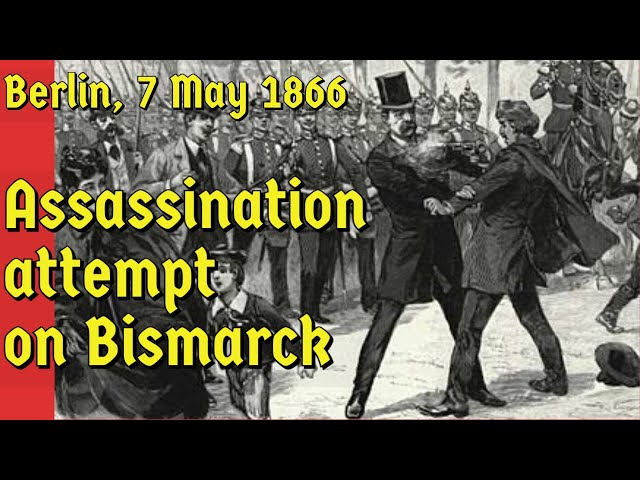
Attempt to kill Bismarck : 7 May 1866 | (Y) | | |
On 7 May 1866 an attempt was made to kill Otto von Bismarck by Ferdinand Cohen-Blind. Ferdinand Cohen-Blind was a 22 year old student with strong ideas on democracy and who believed that Bismarck was leading Prussia into war. His belief was absolutely correct, within a few weeks, Bismarck had engineered a war with Austria that drew into several German states and ended up costing the lives of around 170,000 people, not to mention those who were injured or disabled or the property and treasure that was lost. On the day of the shooting, Cohen-Blind waited in the Unter den Linden, a central street in the government area of Berlin where Bismarck would have to pass on his way home from seeing the king. Cohen-Blind fired twice from behind, however Bismarck was able to turn around and grab his assailant. Three more shots were fired before soldiers from the 1st Battalion of the 2nd Guards managed to arrest him. Bismarck, somewhat true to his nature, just went home as normal but possibly after persuasion, he allowed a the king's doctor, Gustav von Lauer, to examine him. According to the medical examination, three rounds had only grazed Bismarck's body and two had ricocheted off the ribs! Perhaps someone with more medical knowledge than I can explain how this is possible? Cohen-Blind committed suicide after being arrested by cutting his throat with a knife, severing his carotid artery. The war with Austria occurred and then one with France. Bismarck created the German Reich. As it happened his creation of the German political system long term was a disaster for the German states and for all of Europe. Whereas by 1914, Germany had possibly the strongest economy in the world, its political system was decades behind. Could the action of Cohen-Blind have avoided the European wars and indeed the Holocaust which I suppose must have taken the lives of his relatives? That is a subject for debate!
kill bismarck | Bismarck | Berlin | Germany | Cohen Blind | assassination | political | kill the bismarck | Kill teh bismarck

History on YouTube | (Y) | (Ajax)
Germany has problems with war reparations, 5 May 1921 #History #Shorts | (Y) | | |
On 5 May 1921, The Allied Supreme War Council notified Germany of a default on the 1 May 1921 payment due for 12 billion gold marks of war reparations. It announced that Germany would have until 12 May 1921 to accept a total debt of 135 billion marks (which was then roughly £6.75 billion or $33.75 billion), to be "paid in an indeterminate number of annual installments" worth of gold. British Prime Minister David Lloyd George handed the ultimatum, signed by himself and representatives of France, Belgium, Italy and Japan to Germany's Ambassador Friedrich Sthamer. https://www.facebook.com/historysite/ Production of independent researched history is time consuming and expensive. Please consider supporting me on Patreon. https://www.patreon.com/alanheath
war reparations | reparations | reparations ka hdami | reparations for slavery reaction | reparations 2020 debate | reparations 2021 debate | reparations 2003 | reparations song | reparations ka$hdami | reparations for slavery reaction 2021 | reparations for colonization song | reparations hodgetwins | reparations kashdami lyrics | reparations debate coleman hughes | reparations in chicago | reparations illinois | war reparations treaty of versailles | war reparations ww2 | War reparations wwi

History on YouTube | (Y) | (Ajax)
German cabinet resigns over reparations : 4 May 1921 #History #Shorts | (Y) | | |
On 4 May 1921 the German cabinet resigned en masse over Allied reparations demands which the country was unable to pay. https://www.facebook.com/historysite/ Production of independent researched history is time consuming and expensive. Please consider supporting me on Patreon. https://www.patreon.com/alanheath
reparations | reparations ka hdami | reparations for slavery reaction | reparations 2020 debate | reparations 2021 debate | reparations 2003 | reparations song | reparations ka$hdami lyrics | reparations for slavery reaction 2021 | reparations for colonization song | reparations hodgetwins | reparations debate coleman hughes | reparations in chicago | reparations kashdami lyrics | Reparations illinois

History on YouTube | (Y) | (Ajax)
Creation of Northern Ireland 3 May 1921 #History #Shorts | (Y) | | |
Northern Ireland came into being on 3 May 1921 as a result of The Government of Ireland Act 1920. The object was to provide home rule for both parts of Ireland, however Southern Ireland became independent as the Irish Free State in 1922. The institutions set up under this Act for Northern Ireland continued to function until they were suspended by the British parliament in 1972 as a consequence of the political violence known as The Troubles. The Act was completely repealed as a result of the 1998 Good Friday Agreement which ended most of the violence and paved a route for peace, which is now threatened by Brexit. https://www.facebook.com/historysite/ Production of independent researched history is time consuming and expensive. Please consider supporting me on Patreon. https://www.patreon.com/alanheath YouTube has introduced a feature called #Shorts which is clearly designed to compete with TikTok. If you are watching on a mobile you will see #Shorts come up but not if you are watching on a computer. I don't think that this is what my audience wants to see, but on the off chance that it might be, I am going to give it a try by doing previews of videos that will come up in the future. #Shorts are in portrait mode and under 60 seconds.
Northern Ireland | northern ireland riots 2021 | northern ireland vs usa | northern ireland accent | northern ireland vs ukraine | norhern ireland | northern ireland riots | northern ireland conflict | northern ireland troubles | northern ireland ukraine | northern ireland stone gate | northern ireland vs ireland | northern ireland brexit | northern ireland national anthem | northern ireland violence | norhern ireland riots 2021 | northern ireland protocol | norhern ireland troubles

History on YouTube | (Y) | (Ajax)
Beginning of the Third Silesian Uprising 2 May 1921 #History #Shorts | (Y) | | |
The Third Silesian Uprising started on the night of second to third of May 1921. This area was contested between Germany and the newly created state of Poland. A plebiscite had shown a German majority. The Polish side later claimed that it was only interested in those lands where it believed there was a Polish speaking majority although documents presented at Versailles show a different story. The plan for the Third Uprising was to infiltrate and destroy rail bridges and then organise an uprising. In the photograph we can see a derailed train at Kędzierzyn-Koźle. The Polish insurgents also managed to destroy bridges at Szczepanowice, Kluczbork, Głogówek and Świętochłowice. Two German military rail transports were also destroyed. After the operation, most of the Polish agents managed to withdraw over the border to Sosnowiec. On 18 June 1921 the Official Gazette of the Opole Distric announced a reward of 10,000 Reichsmarks for information about the perpetrators of the attacks https://www.facebook.com/historysite/ Production of independent researched history is time consuming and expensive. Please consider supporting me on Patreon. https://www.patreon.com/alanheath YouTube has introduced a feature called #Shorts which is clearly designed to compete with TikTok. If you are watching on a mobile you will see #Shorts come up but not if you are watching on a computer. I don't think that this is what my audience wants to see, but on the off chance that it might be, I am going to give it a try by doing previews of videos that will come up in the future. #Shorts are in portrait mode and under 60 seconds.
Third Silesian Uprising | thrid silesian uprising | Silesia | Silesian | uprising

History on YouTube | (Y) | (Ajax)
Death of Mussolini : a genuine piece of fake news | (Y) | | |
This 'news' item got it right that Mussolini had been killed, but it got the rest of the information completely wrong. This was broadcast probably on 30 April 1945, two days after Mussolini's death but before the death of Hitler became known. I suspect this mistake was due to trying to be first to get the information out, guessing, hoping for the best and getting it wrong! The same happened for the reporter who tried to be first in reporting Goering's execution!
Mussolini | WW2 | death

History on YouTube | (Y) | (Ajax)
The worst maritime disaster in US history. The loss of the Sultana 27 April 1865 #History #Shorts | (Y) | | |
The worst maritime disaster in US history did not happen at sea but in the Mississippi. This photograph of the Mississippi side wheel steamboat Sultana was taken on 26 April 1865. The following day it exploded, killing 1168 people, the worst maritime disaster in United States history. Constructed of wood in 1863 it was intended for the lower Mississippi cotton trade. The steamer normally carried a crew of 85. For two years, it ran between St. Louis and New Orleans, mainly shuttling troops during the American Civil War which was then on going. Although designed with a capacity of only 376 passengers, she was carrying 2,137 when three of the boat's four boilers exploded. The boat sank near Memphis, Tennessee. The reason for the disaster is not known. https://www.facebook.com/historysite/ Production of independent researched history is time consuming and expensive. Please consider supporting me on Patreon. https://www.patreon.com/alanheath
worst maritime disaster in US | worst maritime disaster | worst maritime disasters in history | worst maritime disaster ever | worst maritime disasters | worst maritime disasters in us history | worst maritime disaster in the world | worst maritime disaster us | worst maritime disaster in the great lakes | worst maritime disasters 21st century | worst maritime disaster in american history | worst maritime disaster in world history | Worst maritime disaster in chicago

History on YouTube | (Y) | (Ajax)
First use of the guillotine 25 April 1792 #History #Shorts | (Y) | | |
The guillotine was first used on 25 April 1792, the condemned having to wait for it to be built. The guillotine was seen as being a more humane way of despatching a criminal as chopping someone's head off by axe frequently took many attempts. As far as I am aware, the guillotine has a 100% success rate! https://www.facebook.com/historysite/ Production of independent researched history is time consuming and expensive. Please consider supporting me on Patreon. https://www.patreon.com/alanheath YouTube has introduced a feature called #Shorts which is clearly designed to compete with TikTok. If you are watching on a mobile you will see #Shorts come up but not if you are watching on a computer. I don't think that this is what my audience wants to see, but on the off chance that it might be, I am going to give it a try by doing previews of videos that will come up in the future. #Shorts are in portrait mode and under 60 seconds.
First use of the guillotine | first uise of the guillotine | first use of teh guillotine | First uise of teh guillotine

History on YouTube | (Y) | (Ajax)
Schlosskopf castle guarding the salt route above Reutte, Austria. A marvel of military engineering. | (Y) | | |
Reutte in Austria is one of my favourite places. It has some wonderful historical places to visit, the most interesting of all, I think, is the Schlosskopf. Perched at the top of a mountain around 1,250 metres above sea level. Schlossberg castle hovers 150 meters above the nearby Ehrenberg Castle in order to guard it from being outflanked which happened in 1703, when the Tyrolese reconquered the castle from the Bavarians thus making the requirement for a castle in this location obvious. Getting to the castle is quite strenuous but it is well worth it for the views over Reutte, the Lech Valley and the Alps. The castle is comparitively modern, built more than 500 years after Ehrenberg castle below. The first part of the construction was begun with a guardhouse which in 1726 was enlarged into a fortress. You can see how difficult it is for the tourist to get up the mountain, therefore imagine how difficult it was for those building the castle and therefore its enormous cost which was three million florins. The castle never had to prove itself in a military action and with the decline in trade on the Via Claudia and hence the value of the pass, the castle was sold to two citizens from Reutte for 2,000 florins. These business people stripped all the useful assets leaving the walls which were too far up the mountain to bother with. Thanks to renovation work since 2000 we can now enjoy the castle as part of the Ehrenberg complex.https://www.facebook.com/historysite/ Production of independent researched history is time consuming and expensive. Please consider supporting me on Patreon. https://www.patreon.com/alanheath
reutte austria | reutte | Schlosskopf | Austria | military engineering | reuters | reutter family | reutter | reuters live | reuters pronunciation | reuteri probiotic | reuters myanmar | reuteri yogurt | reuters news live ethiopia | reuters wire | reuters ethiopia | reuter organ | reuters pronounciation | austrian death machine | military engineering documentary

History on YouTube | (Y) | (Ajax)
Memorial to the wars of Otto von Bismarck in Heilbad Heiligenstadt | (Y) | | |
Otto von Bismarck is seen as the person most responsible for the unification of Germany, as though that were brought about by a grand plan that Bismarck thought up. The route to the unification of Germany, centred around Prussia came about with three wars. The first war was against Denmark, which pushed that country out of Schleswig Holstein. The second war was the war against Austria and its allies in Germany which saw Prussia become the dominant force in the states that were to become Germany and the third war was against France. On this monument are the names of those that paid for Bismarck's ambitions with their lives from the town of Heilbad Heiligenstadt. https://www.facebook.com/historysite/ Production of independent researched history is time consuming and expensive. Please consider supporting me on Patreon. https://www.patreon.com/alanheath
otto von bismarck | Bismarck | Germany | Prussia | Heilbad Heiligenstadt | otto von bismarck extra history | otto von bismarck voice | otto von bismarck documentary | otto von bismarck reaction | otto von bismarck extra history reaction | otto von bismarck 3 | otto von bismarck crash course | otto von bismarck speech | otto von bismarck song | otto von bismarck the iron chancellor | otto von bismarck movie | otto von bismarck unification of germany | Otto von bismarck documenatry

History on YouTube | (Y) | (Ajax)
Execution of the assassins of Tsar Alexander II of Russia, 15 April 1881 #History #Shorts | (Y) | | |
The execution of the assassins of Tsar Alexander II took place some five weeks after the Tsar was murdered. On 13 March 1881, Tsar Alexander II was assassinated by members fo the Narodnaya Volya organisation. Two bombs were thrown, the first bomber, Nikolai Rysakov, was arrested. In prison he co-operated leading the plice to round up several members of Narodnaya Volya. On 29 March 1881, all the defendants were found guilty and were sentenced to death by hanging. Rysakov then offered to work for the police and said he was very repentant and begged forgiveness. On the morning of 15 April 1881 (3 April, Old Style), the the assassins of Tsar Alexander II were transported in two carriages to the parade grounds of the Semenovsky Regiment, where the execution was set to take place. They were all dressed in black prison uniforms, and on their chests hung a sign with the inscription: "Regicide". The executions commenced at 9:20 AM watched by a huge crowd. Rysakov was last to be hanged and therefore had to witness the execution of all his companions. The executions took ten minutes. The bodies hung for twenty minutes more. A military doctor then examined the corpses and pronounced them dead. They were cut down from the gallows and placed in black wooden coffins. They were buried in a nameless common grave. YouTube has introduced a feature called #Shorts which is clearly designed to compete with TikTok. If you are watching on a mobile you will see #Shorts come up but not if you are watching on a computer. I don't think that this is what my audience wants to see, but on the off chance that it might be, I am going to give it a try by doing previews of videos that will come up in the future. #Shorts are in portrait mode and under 60 seconds.
execution of the assassins | execution of assassins of Tsar | Tsar Alexander II | tsar alexander iii | tsar alexander ii assassination | tsar alexander ii documentary | tsar alexander ii death | tsar alexander iii documentary | tsar alexander iii voice | tsar alexander iii coronation | tsar alexander iii movie | tsar alexander ii reforms | tsar alexander iii cause of death | tsar alexander ii major accomplishments | tsar alexander ii of russia | excecution of assassins of tsar

History on YouTube | (Y) | (Ajax)
Plebiscite in Austria for union with Germany : 10 April 1938 #Shorts | (Y) | | |
On 10 April 1938, a plebiscite in Austria was held asking the population if they wanted to become part of Germany or not. The results suggest that every non Jewish Austrian voted for union and a majority of Jews did too! Quite remarkable in the circumstances. Fraud aside, I studied with someone who was then living in Vienna and he said that if they had held a fair and free plebiscite, there was a very good chance that Austrians would have voted for the Anschluss. YouTube has introduced a feature called #Shorts which is clearly designed to compete with TikTok. If you are watching on a mobile you will see #Shorts come up but not if you are watching on a computer. I don't think that this is what my audience wants to see, but on the off chance that it might be, I am going to give it a try by doing previews of videos that will come up in the future. #Shorts are in portrait mode and under 60 seconds. My history channel is based on my own research and generally comes from places I have visited and or original research. I live in a motorhome and as such spend most of my time travelling between Poland, Germany and Italy which is why there is a tendency to produce material from these countries, and sometimes material that is not available in English. My speciality is in World War Two, and in particular, the Holocaust although as you can see, I have opinions on a lot of other historical subjects too. https://www.facebook.com/historysite/ Production of independent researched history is time consuming and expensive. Please consider supporting me on Patreon. https://www.patreon.com/alanheath
Plebiscite in Austria | History on YouTube | history | World War 2 | World War 1 | Nazi Germany | Soviet Union | Poland | Central Europe | Holocaust | Plebicite in austria

History on YouTube | (Y) | (Ajax)
Attempted assassination of Tsar Alexander II, 4 April 1866 #History #Shorts | (Y) | | |
On 4 April 1866, Dmitry Karakozov made an unsuccessful Attempted assassination of Tsar Alexander II. This happened at the gates of the Summer Garden in St Petersburg. As the Tsar was leaving, Dmitry rushed forward to fire. The attempt was thwarted by Ossip Komissarov, a peasant-born hatter's apprentice, who jostled Karakozov's elbow just before the shot was fired. Contemporary monarchists argued that Komissarov's action proved the people's love for their tsar, while contemporary radicals and later Soviet historians argued that Komissarov's involvement in the event was either an accident or an outright government fabrication. Komissarov was ennobled and given a generous allowance, but proved to be an embarrassment to the government due to his boorishness and incoherence and had to be politely removed to the countryside. Karakozov tried to flee instead of using the second cartridge in his double-barrelled gun, but was easily caught by the guards. He kept one hand in his jacket. It was revealed later to be holding morphine and strychnine to kill himself and prussic acid to disfigure his face. Alexander asked him "What do you want?" "Nothing, nothing," he replied. Karakozov was taken to the Peter and Paul Fortress. He begged for forgiveness and converted to Russian Orthodoxy. The Supreme Criminal Court sentenced him to death by hanging and he was executed in St. Petersburg on 3 September 1866. https://www.facebook.com/historysite/ Production of independent researched history is time consuming and expensive. Please consider supporting me on Patreon. https://www.patreon.com/alanheath YouTube has introduced a feature called #Shorts which is clearly designed to compete with TikTok. If you are watching on a mobile you will see #Shorts come up but not if you are watching on a computer. I don't think that this is what my audience wants to see, but on the off chance that it might be, I am going to give it a try by doing previews of videos that will come up in the future. #Shorts are in portrait mode and under 60 seconds.
assassination of Tsar Alexander II | assasination of tsar alexander ii | assassination of tsar alexander iii | Assasination of tsar alexander iii
History on YouTube | (Y) | (Ajax)
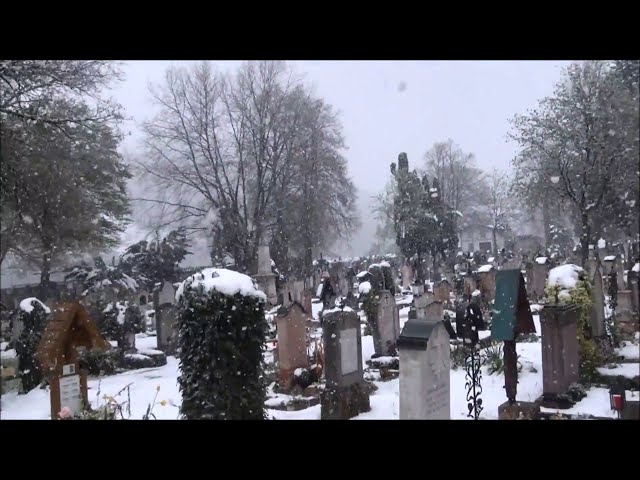
The grave of Dietrich Eckart, one of the founders of the Nazi Party and mentor of Hitler | (Y) | | |
Dietrich Eckart was born in 1868 in Neumarkt, about 32km southeast of Nuremberg. Eckart initially studied law at Erlangen, later medicine at the Ludwig Maximilian University of Munich. Like many students he spent his time drinking. Fencing was also a popular pastime. In 1891 he dropped out of university to became a writer. Around this time, he became a drug addict with a morphine problem which lasted for the rest of his life. In 1895, his father died also, leaving him a considerable amount of money that Eckart soon spent on alcohol, drugs and women. He moved to Berlin in 1899, by this time almost penniless. In the capital, Eckart became the protégé of the artistic director of the Prussian Royal Theatre, Count Georg von Hülsen-Haeseler (1858–1922). The Count his plays on the stage and thus Eckart had a steady income. One such play was the 1912 adaptation of Henrik Ibsen's Peer Gynt which ran for more than 600 performances in Berlin alone. Eckart identified himself so much with the play, that his own letterhead used the name Peer Gynt rather than his real name. Up until then, Eckart had been struggling but the success of the play changed his financial situation. His was now a riches to rags back to riches situation. It made him a lot of money and powerful connections amongst the wealthy, connections which were to benefit Hitler later. His living standards were further assisted when he married a rich widow in 1913, Rosa Marx, née Wiedeburg, from Bad Blankenburg in Thuringia. He lived with her until the summer of 1915 when he moved back to Munich. He divorced his wife in 1921. Although nationalist his nationalism did not go as far as to fight in the armed forces, although years of substance and alcohol abuse had certainly taken their toll. In his mid forties when WW1 started, at an age when he was perfectly able to join up to fight, Eckart managed to avoid the draft. Obviously there was no point in risking dying for your country when others would do it for you. Soon after his return to Munich he founded the Hoheneichen publishing house. In 1918 Eckart became the editor of a racist journal called Auf gut Deutsch (which would translate into English as In clear language) . Working alongside him were Alfred Rosenberg and Gottfried Feder. In January 1919, Eckart, Feder, Anton Drexler and Karl Harrer founded the Deutsche Arbeiterpartei (German Workers' Party) which was shortened to D.A.P.. He wrote the lyrics of Deutschland erwache ("Germany awake"), which became an anthem of the future Nazi Party. In February 1920 Eckart changed the party name to the Nationalsozialistische Deutsche Arbeiterpartei (National Socialist German Workers Party), or to give it the abbreviated form N.S.D.A.P.) or the Nazi Party. Following the ban on the publication of Auf gut Deutsche, he was instrumental in acquiring for the party a newspaper, the Völkischer Beobachter. Eckart believed in the coming of a German Messiah who would redeem Germany after its defeat in World War I. Eckart may have believed that he had found that Messiah. The two became close, like father and son. Eckart became the mentor of the future Fuhrer. Eckart was able to introduce Hitler to others such as the the photographer Heinrich Hoffmann with whom he had a relationship for the rest of his life. In June 1921, Eckart and Hitler were in Berlin trying to raise money for the party. In their absence, the party board attempted to merge the party with another which infuriated Hitler when he found out. He resigned from the party but returned when Eckart managed to persuade the board to let him be the leader on 26 July 1921. Hitler was the only one who was a good speaker and therefore capable of fund raising. Without Hitler, the party would have sunk into obscurity. There was also disagreement on strategy. Eckart was in favour of a putsch in Berlin and had supported the Kapp Putsch but did not see much sense in attempting one in Munich. By May 1923, Eckart seems to have been having second thoughts. Hanfstaengl said that he complained that Hitler had "megalomania halfway between a Messiah complex and Neroism" after Hitler had compared himself to Jesus throwing the money-changers out of the temple. Despite growing apart on daily matters, Hitler regularly visited him seeing him perhaps as a ‘grand old man’ of the party. The role that Eckart played in the Beer Hall Putsch is not clear. He disagreed with it, noting that a putsch had to take place in the capital. It would appear that Eckart was not at the Beer Hall but was in the street the following day during the march. Logically, for the authorities he was a suspect in the attempt to overthrow the government. He was arrested one week after the putsch and held in Landsberg Prison along with Hitler and other party officials. On 20 December 1923 he suffered a heart attack which led to his release. He died six days later on 26 December 1923.
Dietrich Eckart | dietrich eckart documentary | dietrich eckart poems | dietrich eckart grave | dietrich eckart poem the great one | dietrich eckart last words | dietrich eckart pronunciation | dietrich eckart kimdir | dietrich eckart family tree | sturmlied dietrich eckart | dietrich eckart klinik | dietrich eckart documenatry | dietrich eckart peoms | dietrich eckart peom the great one | dietrich eckart poem teh great one | dietrich eckart poem the gerat one | Dietrich eckart lastr words

History on YouTube | (Y) | (Ajax)
Beer Hall Putsch treason trial ends. 1 April 1924 #History #Shorts | (Y) | | |
On 1 April 1924, the trial of the ringleaders of the Beer Hall Putsch of 9 November 1923 came to an end. Here we can see the nine traitors accused of the putsch, some are carrying swords which shows that they have aristocratic status which perhaps could have shown that this was not a movement from the working classes. Despite the fact that four police officers had been killed in the attempted coup d’etat, the sentences were very lenient. Ludendorf was aquitted, he had used the excuse that he was there by accident. Ernst Röhm and Wilhelm Frick, though found guilty, were released. Adolf Hitler got a five year sentence, although that was only at the insistence of the presiding Judge, Georg Neithardt. The other judges who were anti Weimar, wanted to release him. Hitler did not even get deported back to Austria once his term was up which was normal in such cases. Hitler, Emil Maurice and Rudolf Hess spent their time in Fortress confinement which was similar to being in a good hotel, with good food and regular visits. https://www.facebook.com/historysite/ Production of independent researched history is time consuming and expensive. Please consider supporting me on Patreon. https://www.patreon.com/alanheath YouTube has introduced a feature called #Shorts which is clearly designed to compete with TikTok. If you are watching on a mobile you will see #Shorts come up but not if you are watching on a computer. I don't think that this is what my audience wants to see, but on the off chance that it might be, I am going to give it a try by doing previews of videos that will come up in the future. #Shorts are in portrait mode and under 60 seconds.
Beer Hall Putsch | beer hall putsch scene | beer hall putsch doug stanhope full | beer hall putsch rise of evil | beer hall putsch footage | beer hall putsch documentary | beer hall putsch wife | beer hall putsch history channel | beer hall putsch reaction | beer hall putsch scene meme | beer hall putsch reenactment | beer hall putsch speech | beer hall putsch explained | beer hall putsch march | beer hall putsch rise of efel | beer hall putsch documenatry | Beer hall putsch wief

History on YouTube | (Y) | (Ajax)
Eiffel Tower opened : 31 March 1889 #History #Shorts | (Y) | | |
The Eiffel Tower was completed on 15 March 1889 and opened two weeks later on 31 March. It had taken two years to build and was designed to be the entrance to the 1889 World's Fair. Today, it is the most-visited paid tourist attraction in the world. The tower is 324 metres tall, very roughly equivalent to an 81-storey building. It is the tallest structure in Paris. On opening, it was the tallest man-made structure in the world, a title it held for 41 years until the Chrysler Building in New York City was finished in 1930. Since the construction of the Milau Viaduct, the Eiffel Tower is the second tallest free-standing structure in France. The tower has three levels for visitors, with restaurants on the first and second levels. The top level's upper platform is 276 metres above the ground – the highest observation deck accessible to the public in the European Union. Production of independent researched history is time consuming and expensive. Please consider supporting me on Patreon. https://www.patreon.com/alanheath YouTube has introduced a feature called #Shorts which is clearly designed to compete with TikTok. If you are watching on a mobile you will see #Shorts come up but not if you are watching on a computer. I don't think that this is what my audience wants to see, but on the off chance that it might be, I am going to give it a try by doing previews of videos that will come up in the future. #Shorts are in portrait mode and under 60 seconds.
eiffel tower opened | Eiffel Tower | eiffel tower apartment | eiffel tower at night | eiffel tower restaurant las vegas | eiffel tower live | eiffel tower for kids | eiffel tower minecraft tutorial | eiffel tower elevator ride | eiffel tower las vegas | eiffel tower bloxburg | eiffel tower tour | eiffel tower live cam | eiffel tower falling down | Eiffel tower viewing deck las vegas

History on YouTube | (Y) | (Ajax)
Battle of Towton, 29 March 1461 #History #Shorts | (Y) | | |
On Palm Sunday, 29 March 1461, the Battle of Towton in Yorkshire took place in a snow storm as part of the English Wars of the Roses. It was probably the largest and bloodiest battle ever fought in the British Isles. Around 50,000 soldiers were involved. On sighting the Lancastrians, the Yorkists saw they were heavily outnumbered. However the wind was behind them and they were able to use their archers to take advantage. Out of archery range, the Lancastrians attacked and were massacred in the process. The victory of the Yorkist Edward IV led to him displacing Henry VI. YouTube has introduced a feature called #Shorts which is clearly designed to compete with TikTok. If you are watching on a mobile you will see #Shorts come up but not if you are watching on a computer. I don't think that this is what my audience wants to see, but on the off chance that it might be, I am going to give it a try by doing previews of videos that will come up in the future. #Shorts are in portrait mode and under 60 seconds. https://www.facebook.com/historysite/ Production of independent researched history is time consuming and expensive. Please consider supporting me on Patreon. https://www.patreon.com/alanheath

History on YouTube | (Y) | (Ajax)
The war memorial in Aschbach, Bavaria, Germany | (Y) | | |
Aschbach, Bavaria is a charming village which for administrative reasons is part of nearby Schlüsselfeld. The war memorial is located in the centre of Aschbach and based on my calculations from census returns, something approaching forty percent of the male population of military service age must have been killed in the second world war. I could have made e a mistake or there could be information I am unaware of which would explain why there are so many names on it. The history of the town goes back many years. The manor house which is on the road leading north out of the village belonged to the von Pollnitz family and was a location where artworks looted during the Nazi regime were hidden. The palace was raided by the American unit seeking looted art in 1945. Some of these artworks turned up in a collection in Munich only a few years ago. In the nineteenth century a significant part of the population was Jewish, the synagogue still stands as does the cemetery which dates to 1720 and has a large number of headstones. It has a population of only a few hundred people but is home to two major luxury motorhome producers, Concorde and Phoenix, and of course Morelo is nearby in Schlüsselfeld. Access from the motorway is very convenient although this does have the downside that it can be heard! https://www.facebook.com/historysite/ Production of independent researched history is time consuming and expensive. Please consider supporting me on Patreon. https://www.patreon.com/alanheath
Aschbach | Bavaria | Germany | war memorial | second world war | First world war | aschbacher | aschbacher zib 2 | aschbacher christine | aschbacher christine interview | aschbacher rede | aschbacher petutschnig | aschbacher deutsch | aschbacher willkommen österreich | aschbacher dissertation | aschbacher roboter | aschbacher pressekonferenz | aschbacher best of | aschbacher hons | Aschbacher armin wolf

History on YouTube | (Y) | (Ajax)
Enabling Act destroys opposition in Germany 24 March 1933 #History #Shorts | (Y) | | |
24 March 1933 German President, Paul von Hindenburg signed the Enabling Act giving Hitler total power in Germany. The previous day Hitler had managed to get a two thirds majority in the Reichstag for this thanks not only to threats which meant that many socialist candidates were now in exile and the banning of the communist party but also the support of the Catholic Centre Party. At the same time Hitler reached a concordat with the Pope which was a remarkably small price to pay for his dictatorship. So how was this possible? In the November 1932 the Nazis lost around 15% of their vote compared to the previous election but remained the largest single party in the Reichstag. On 30 January 1933, Hitler had been appointed Chancellor with a minority of Nazis in the cabinet but with Hermann Goering commanding the police in the largest German state, Prussia. On 27 February 1933 arsonists set alight to the Reichstag and as a result of this Hitler persuaded von Hindenburg to suspend many civil liberties in what has been called the Reichstag Fire Decree. This meant the arrest of opposition members of parliament who were thus unable to contest seats in the 5 March 1933 election. In the climate of fear created by the Nazis, they got 43.8 percent of the vote. The 8% of their partners, DNVP, took them over the line. What we now call the Enabling Act was then called the Law to Remedy the Distress of the People and the Reich. It allowed the cabinet to enact laws that deviate from the constitution as long as they did not affect parliamentary institutions and the rights of the President. Laws would be published in the official gazette in the normal way and take effect on the following day, unless a different date was specified. The government could make treaties with foreign powers bypassing the legislative authorities. The fifth point clearly stated that it expired at the latest on 1 April 1937, assuming that the Reich government was not replaced by another. It needs to be pointed out that there was nothing new with Enabling laws as other chancellors of the Weimar Republic had virtually ruled with them. However none of them turned the system into a dictatorship as Hitler did. I think this came about because of the Nazi control of the police (which was already a quite conservative organisation), the laws allowing them to arrest political opponents following the Reichstag fire and President Hindenburg;s failing health which meant that he was coming under more pressure from his son Oskar and Franz von Papen, both of whom thought that they could control Hitler for their own ends. Given that the Enabling Act had been used in the past, that his own rights remained unaffected and that the law placed strict limits on it, Hindenburg may have felt less uneasy about it as he should have done. Hindenburg lived a little over another 16 months and during that time, the respect for his office may have placed a slight brake on Hitler but one could also suggest that it was a time when the Nazis were able to consolidate their power. Hindenburg wrote in his will that Hitler needed to be removed from power. However Hindenburg had not more right to appoint his successor than Lenin would have done in allegedly writing that Stalin was not to follow him. The Enabling Act was valid for four years. In March 1933, Hitler emphasized that the new law was not the abolition of the Reichstag as he only intended to use the act in cases of emergency which is what it was planned for. However from then on Hitler and his cabinet ruled independently and within a few months the Nazi party was the only party left in the Reichstag. The Enabling Act was renewed in 1937 and 1939. In 1943, Hitler announced that it did not need to be renewed any more and that it was permanently in force. More detailled video : https://www.youtube.com/watch?v=NO24i7Jh8qY Production of independent researched history is time consuming and expensive. Please consider supporting me on Patreon. https://www.patreon.com/alanheath YouTube has introduced a feature called #Shorts which is clearly designed to compete with TikTok. If you are watching on a mobile you will see #Shorts come up but not if you are watching on a computer. I don't think that this is what my audience wants to see, but on the off chance that it might be, I am going to give it a try by doing previews of videos that will come up in the future. #Shorts are in portrait mode and under 60 seconds.
Enabling Act | enabling act rise of evil | enabling acts real estate | enabling act class 9 | enabling act magnet brains | enabling act gcse | enabling act in hindi | enabling activity 3 skills integration up to inter vlan routing | enabling act rise of efel | enabling acts rela estate | enabling act clas 9 | Enabling activity 3 skills intergration up to inter vlan routing

History on YouTube | (Y) | (Ajax)
End of the Kronstadt Uprising 21 March 1921 #History #Shorts | (Y) | | |
The Kronstadt Uprising was suppressed by the Soviet government using massive force on Thursday, 21 March 1921. The uprising had been caused as formerly ardent supporters of the Bolshevik revolution had turned against it and the inequalities they saw it was bringing. Before the final collapse of the revolt, the Kronstadt Revolutionary Committee destroyed the Soviet Navy warships Petropavlovsk and Sebastopol. The Kronstadt base held around 15,000 troops, around 800 managed to get across the frozen ice to Finland on foot, others failed in the attempt and many were taken prisoner. The fate of the prisoners was either murder or many years in a camp.
Kronstadt Uprising | Kronstadt Uprsing | Kronstadt | 1921 | Uprising | Soviet | Boleshevik | kronstadt uprising punk | kronstadt uprising band | kronstadt uprising 1921

History on YouTube | (Y) | (Ajax)
Upper Silesian Plebiscite, 20 March 1921 (Poland v Germany) | (Y) | | |
On 20 March 1921 the Upper Silesian Plebiscite was held where the inhabitants of Upper Silesia had to decide if they wanted to be part of Poland or Germany. A large part of this area had been part of Poland before the eighteenth century partitions in the country. Due to the growth of heavy industry and mineral deposits, particularly coal, iron ore and to a lesser extent zinc and other metals, this area was strongly desired by both sides. In the summer of 1920, there had been a plebiscite in East Prussia where the inhabitants could decide if they wanted to live in Poland or Germany. The result was an overwhelming victory for the German side with only some very small areas going over to Poland. East Prussia, however did not have the economic clout of Upper Silesia. Upper Silesia was the second highest producing heavy industrial area in Germany before World War One. There were also other major differences between a plebiscite in this area as opposed to East Prussia. In East Prussia there was a Polish speaking population, but on the whole they were Protestants and strongly resented the idea of being taken over by Catholics who came from what had been Russia. Thus they were far more assimilated with their German neighbours. They resented people coming in from the south telling them what to do. The plebiscite in East Prussia had occurred at a time when Poland was in dire straights in the war against the Soviets. The Red Army was closing down on the Polish capital and people were afraid of the reports of Soviet bestiality which had been widely published. A vote for Poland was thus seen as potentially ending up in a communist country. However there were also other things which were common to both. People were afraid of losing their pensions, Germany after all had an advanced social welfare system and the potential of a much stronger economy. Poland was a leap in the dark although the Polish government had promised to maintain social security benefits including benefits. There may also have been fear of harmonising vastly different legal systems which had hitherto existed in the Russian, Austrian and German empires out of which the new Poland was being created. In Upper Silesia, the census returns showed many areas with a majority Polish speaking population. Unlike in East Prussia, those campaigning for the Polish side were locals and not Poles from what had been Russia. To make it more complicated, there were those that considered themselves neither Polish nor German but Silesians. Unlike in East Prussia, both Germans and Poles were Catholics. The western Allies took a keen interest in the fate of Upper Silesia because of its economic potential. It seems as though France wanted to weaken Germany so was happy to support Polish claims whereas the British and Italian governments feared that Germany would not be able to pay reparations without it. It is quite clear that there was a strong Polish majority in some areas and others had an overwhelming German majority. It is often claimed that the Polish government wanted the plebiscite to take place only in the territory to the east of the Oder river, however as you can see from this map presented to the Paris Peace Conference by the Polish delegation, that was not true. The Polish side was proposing a border which would have taken in the entire plebiscite area. Had the plebiscite been held only in those areas which had a Polish majority then the result would have been much clearer. During the period leading up to the plebiscite, the German police and administration remained in place which was clearly advantageous to the German side when there was increasing unrest. The right to vote was granted to all aged 20 and older who either had been born in or lived in the plebiscite area. The vote took place on 20 March 1921. A total of 707,605 votes were cast for Germany and 479,359 for Poland. At a cursory glance, it seems a major victory for the German side. However when one looked at the breakdown of how the vote went, then it became clear that a more detailed examination was necessary. Unhappy that predominantly Polish areas were to remain in Germany, the Third Silesian Uprising broke out shortly afterwards. The matter was brought before the League of Nations. In 1922, a six-week debate decided that Upper Silesia should be divided. This was accepted by both countries. Approximately 736,000 Poles and 260,000 Germans thus found themselves now in Polish (Upper) Silesia, and 532,000 Poles and 637,000 Germans remained in German (Upper) Silesia. As there were far more Poles in Germany than vice versa, these figures suggest that Germany got a rather good deal, despite losing the economically richest area. That however is a story for another time.
Upper Silesian Plebiscite | Upper Silesia | Poland | Germany | Versailles | plebiscite | Beuthen | Bytom | Katowice | Kattowitz | Silesian Uprising | upper silesian plebicite | upper silesia plebiscite | Upper silesia plebicite

History on YouTube | (Y) | (Ajax)
Treaty of Riga ends Polish Bolshevik War : 18 March 1921 | (Y) | | |
On 18 March 1921 the Treaty of Riga ended the Polish Bolshevik War between Poland and the Russian Socialist Federative Soviet Republic which later became the Soviet Union. and established the eastern border of Poland until the Soviet invasion of 17 September 1939. Negotiations had gone on for more than six months. In this photograph we can see the Polish delegation arriving in Riga for the initial cease fire talks. General Mieczysław Kulinski is In the centre as the representative of the Polish supreme command. This photograph shows the very first meeting of the delegations seeking to find a peace treaty. The Polish side is on the right and the Soviet side on the left. There were also various sub commissions, here for example, we see the legal commission. In this photograph we can see the Polish delegation on the right and the Soviet side have their backs to the photographer. The Polish government had earlier promised its Ukrainian allies not to make a separate peace, it however conducted negotiations without them and ignored their agreement with them when it came to the peace treaty leaving them to be swallowed by the Soviets. Polish military leader Jóżef Piłsudski was utterly disgusted with this behaviour, he apologised profusely to Ukrainian troops in Poland but he in charge in the field not in Warsaw. Poland as a country had been broken up by three divisions of its territory between its neighbours Russia, Austria and Prussia during the eighteenth century. Poland regained its independence as a result of the first world war but the exact location of the borders needed to be settled. At the Paris peace talks, the Polish side presented this map showing where the Polish language was spoken. The red line shows the border proposed. Red shows a Polish majority population. Pink shows a Polish minority population of one third or more and the other colours lower amounts of Poles. It also shows Poles living outside the proposed borders as spots. It needs to be pointed out that some areas were inhabited by a mixture of peoples, not only Poles but also Ukrainians, Belarussians, Jews and even Germans and Czechs. At Paris, a border was proposed by Lord Curzon which came to be known as the Curzon Line however this left millions of Polish speaking people on the eastern side. In the meantime the breakup of Imperial Russia and the civil war in that country created a fluid situation. The war that broke out between Poland and the Bolsheviks had taken both sides almost to victory, the Poles had got as far east as Kiev and the Soviets to Warsaw – and in places across the German border. As you can see from this map, the border agreed at Riga was very smilar to that of the second partition of Poland where the yellow line represents the border after the second partition and the red the Treaty of Riga. Both sides agreed that the border was final and that neither side would claim land on the other side of the border. The USSR broke this part of the treaty in 1939 and even during world war Two refused a return to the borders of the Treaty of Riga. Article four agreed that both sides respected the political sovereignity of the other and not to meddle in its internal affairs. This appears to be a de facto acceptance of Bolshevik rule by the Polish side although the very existence of the Comintern suggests that the USSR had no intention of keeping this point. Anyone who did not like where they were living could opt to move or acquire the citizenship of the neighbouring state. Furthermore both countries agreed that everyone had free intellectual development, the use of their national language and the exercise of their religion. Points within the peace treaty included 30 million gold rubles compensation for Poland for its contribution to the Russian Empire during its occupation of the country. Poland also received locomotives and rolling stock to the value of 29 million gold roubles. Works of art taken from Poland after 1772 were to be returned. Both sides renounced claims to war compensation. Article 3 stipulated that border issues between Poland and Lithuania would be settled by those states. The western Allies had provided for the border of Poland to be on the Curzon line. However they came round to accepting the border within two years. Whereas there were hundreds of thousands of Polish speaking people living to the east of the new border, there were also several million Ukrainian and Belarussians living within the new border. This was to prove a major problem particularly during the second world war. Nonetheless it also needs to be pointed out that the Soviet Union was also multi ethnic. On this channel, we shall be looking at more aspects of recent Polish history.
Polish Bolshevik War | Poland | Soviet Union | Bolshevik | Treaty of Riga | Ukraine | Piłsudski | polish bolshevik war | polish bolshevik war 1920 | polish bolshevik war meme
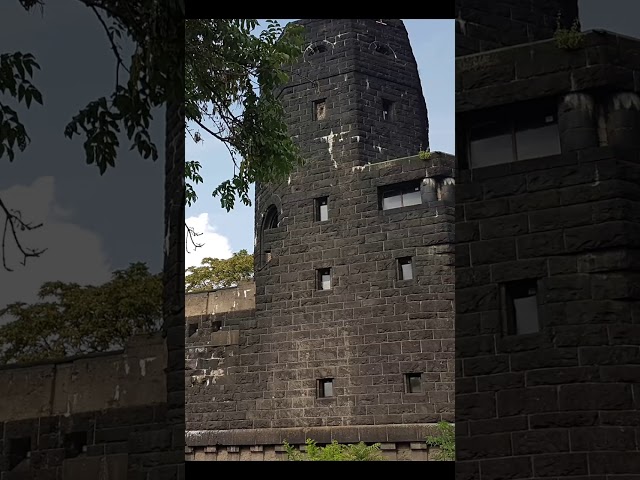
History on YouTube | (Y) | (Ajax)
Collapse of the bridge at Remagen 17 March 1945 #History #Shorts | (Y) | | |
The bridge at Remagen was captured by US forces on 7 March 1945. Attempts were made to blow up the bridge which failed, bombing raids were launched against it which failed, a commando operation using frogmen was attempted which failed, V2 missiles were launched against it which missed. Then, ten days later, the bridge just fell into the Rhine by itself. As you can see in the video, there is still a good deal left! YouTube has introduced a feature called #Shorts which is clearly designed to compete with TikTok. If you are watching on a mobile you will see #Shorts come up but not if you are watching on a computer. I don't think that this is what my audience wants to see, but on the off chance that it might be, I am going to give it a try by doing previews of videos that will come up in the future. #Shorts are in portrait mode and under 60 seconds.
bridge at Remagen | bridge at remagen theme | bridge at remagen scene | bridge at remagen documentary | bridge at remagen trailer | bridge at remagen battle | bridge at remagen finest hour | bridge at remagen soundtrack | bridge at remagen george segal | bridge at remagen ending | bridge at remagen today | bridge at remagen documenatry | bridge at remagen sountrack | bridge at remagen endig | Bridge at remagen todya

History on YouTube | (Y) | (Ajax)
Anglo-Soviet Trade Agreement : 16 March 1921 #History #Shorts | (Y) | | |
The Anglo-Soviet Trade Agreement was signed on 16 March 1921 to facilitate business between the two countries. For the Soviet part, the deal was signed by Leonid Krasin, Commissar of Foreign Trade – and as such a role existed it shows that even the early Bolsheviks agreed that some kind of business would have to go ahead. Nonetheless foreign trade was a State monopoloy in the USSR. Britain was the first country to accept Lenin's offer of a trade agreement. It ended the British blockade, and Russian ports now were open to British ships. Both sides agreed to refrain from hostile propaganda. Full diplomatic ties would take yet some time but this was a good start. YouTube has introduced a feature called #Shorts which is clearly designed to compete with TikTok. If you are watching on a mobile you will see #Shorts come up but not if you are watching on a computer. I don't think that this is what my audience wants to see, but on the off chance that it might be, I am going to give it a try by doing previews of videos that will come up in the future. If there is no demand then after a while I will gradually phase it out!
Anglo-Soviet Trade Agreement | Anglo-soviet trade aggreement

History on YouTube | (Y) | (Ajax)
The assassination of Talat Pasha : Revenge for the Armenian Genocide. 15 March 1921 | (Y) | | |
The assassination of Talat Pasha occured in Berlin on 15 March 1921 as revenge for the Armenian Genocide. He had been a member of the military three man military junta known as the "Three Pashas" which controlled the Ottoman Empire. As Minister of the Interior and holding the equivalent rank of Prime Minister known then as Grand Vizier he played a major role in the Armenian Genocide from 1915. After the end of World War One he had escaped from Turkey. A Turkish court sentenced him to death in absentia on 15 July 1919. He was one of a number of Ottoman officials deemed responsible for the genocide were killed between 1920 and 1922 by the Armenian Revolutionary Federation. The assassin was a 24 year old Armenian student Soghomon Tehlirian. Tehlirian had been a member of a shooting club and was considered to be a good shot. British Intelligence knew that Talat Pasha was in Berlin. Earlier in 1921 they had spoken to him in Hamm and Dusseldorf. He threatened to forment Moslem uprisings throughout the Middle East if Turkey did not get a good deal at the peace table. Then British intelligence service contacted the intelligence services of the Soviet Union to evaluate the situation, as this also effected them. Talaat Pasha's plans made the Russian officials as anxious as the British. The two intelligence services collaborated and agreed to kill him. They decided that Armenian revolutionaries should do the assassination and passed their information onto them. Talât Pasha was living at Hardenbergstraße4, in the Charlottenburg district of Berlin, Tehlirian rented an apartment near his house so that he could watch his everyday routine. On the morning of 15 March 1921, Tehlirian followed Talât as he left his house on Hardenbergstraße. He crossed the street to look at him from the opposite pavement then crossed it again to walk past him to confirm his identity. He then turned around and pointed his Luger to shoot him in the nape of the neck. Talât dropped dead. The agreement amongst the hit squad was for him not to try to escape. As it happened, it would not have managed anyway as passers by jumped on him and held him until the police could take him away. Tehlirian was tried for murder. He was represented by Dr. Theodor Niemeyer, professor of law at Kiel University. Support at the trial for him came from various eye witnesses. German general Otto Liman von Sanders had commanded an army in the Ottoman Empire during the war. Johannes Lepsius had witnessed the aftermath of massacres and had written "Report on the situation of the Armenian People in Turkey and The way to death of the Armenian people. Grigoris Balakian, a bishop of the Armenian Apostolic Church, had survived and documented the Armenian Genocide also spoke up for Tehlirian. The defence lawyers made no attempt to deny that Tehlirian had killed Pasha, and instead focused on the influence of the Armenian Genocide on his mental state. Tehlirian claimed during the trial that he had been present in Erzincan in 1915 and had been deported along with his family and personally witnessed their murder. When asked by the judge if he felt any sort of guilt, Tehlirian remarked, "I do not consider myself guilty because my conscience is clear…I have killed a man. But I am not a murderer." It took the jury slightly over an hour to render a verdict of "not guilty." Was he right to take the law into his own hands, or should the legal process have been followed? What do you think?
assassination of Talat Pasha | Ottoman | Talat Pasha | Berlin | Hardenburgstrasse | Armenia | Otto Liman von Sanders | Charlottenburg | Three Pashas | Talât Pasha | Grand Vizier | Soghomon Tehlirian | Erzincan | Dr. Theodor Niemeyer | Grigoris Balakian | Armenian Apostolic Church | Johannes Lepsius | Armenian Genocide | armenian genocide world history | armenian genocide survivors interview | armenian genocide lessons from history | armenian genocide reaction | Armenian genocide lecture

History on YouTube | (Y) | (Ajax)
Nazi war criminal Martin Sandberger, from death sentence to luxury retirement home. Part 3 of 3 | (Y) | | |
Martin Sandberger was head of Einsatzgruppen 1a and as a Nazi war criminal, directly responsible for 20,000 deaths. In September 1947 he was sentenced to death for war crimes. After the verdict was pronounced, the convicts of the Einsatzgruppen trial were transferred to the Landsberg War Crimes Prison to serve their sentences or to be executed. Sandberger’s death penalty was overturned on 31 January 1951 for life imprisonment. However supporters of Sandberger now started lobbying for his release. These supporters included Federal President Theodor Heuss, Vice President of the Bundestag Carlo Schmid, Prime Minister of Baden-Württemberg Gebhard Müller and Bishop Martin Haug. Sandberger’s father lobbied Federal President Heuss to take the matter up with US Ambassador James Conant. Carlo Schmid, head of the SPD parliamentary group in the Bundestag and before the war Sandberger's professor, claimed that he was a hard-working, intelligent and talented lawyer who had it not been for National Socialism would have become a decent civil servant. On 9 January 1958 he was released from Landsberg prison. After release Sandberger found employment with the Lechler group. This company makes nozzles for spray technology. Today it is in Ulmer Strasse, Metzingen, then it had just moved to Feuerbach, a district of Stuttgart. It would seem that Sandberger had been studying tax law whilst at Landsberg – or at least that is the excuse that the company managing director offered. He was summonsed to the Einsatzgruppen Trial in Ulm in 1958 and was questioned at various times from 1960 by the Central Office for Nazi Crimes in Ludwigsburg. In May 1970, the Stuttgart public prosecutor's office started an investigation about the "shooting of Jews, communists and parachutists in Estonia", the killing of an officer who had fired at a picture of Hitler whilst inebriated, and the murder of "1400-1500 Jews in Kalevi-Liiva" in the autumn of 1942 . Back in the spotlight, Sandberger needed a lawyer and he found the right one in Fritz Steinacker, noted for defending Nazis. Suddenly the healthy Sandberger had all sorts of problems, abnormally high blood pressure, losing his sight, he was at risk of a stroke. Developing health problems however was not necessary. As Sandberger had been tried and condemned at Nuremburg, there was no longer a case to answer. The Stuttgart public prosecutor wrote in a letter dated 13 July 1972 that the investigations against the accused Sandberger had been concluded by the military tribunal 23 years earlier. There was no longer a case to answer to. Sandberger then slipped into obscurity. When Der Spiegel, found him, he was living in a Christian retirement home. Here he had what is described as a two-and-a-half room apartment which cost 2519 euros for the base price per month. However, those that needed it could opt also for a three-course menu between sauna, physiotherapy and have their shopping brought to them. Sandberger had the food brought to his room. A physiotherapist came to visit him also, around three in the afternoon. In between he read with a magnifying glass or, once a week, had someone read to him. The lady usually reads him something edifying from the Bible. Der Spiegel asked him if he felt ashamed after all these years? To quote the magazine ‘The old man in the armchair, the last surviving ringleader in the greatest genocide in history - he was silent and moved his body around as if contemplating something. Then he said, "I don't want to talk about it." https://www.facebook.com/historysite/ Production of independent researched history is time consuming and expensive. Please consider supporting me on Patreon. https://www.patreon.com/alanheath
Nazi war criminal | Martin Sandberger | Einsatzgruppen 1a | Latvia | Estonia | Germany | Stuttgart | Der Spiegel | Nazi | war criminal | Second world war

History on YouTube | (Y) | (Ajax)
Middle East Conference tries to resolve the mess the UK made. 12 March 1921 #History #Shorts | (Y) | | |
The Middle East Conference in Cairo and Jerusalem was held from 12 - 30 March 1921. This was an attempt by the United Kingdom government to resolve a number of problems it had created in trying to defeat the Ottoman Turks in the First Wrold War. In particular, it had made conflicting promises such as the McMahon letters in 1915 agreeing to Arab independence in exchange for assistance against the Turks, the Balfour Declaration establishing a Jewish state and the Sykes – Picot agreement whereby France and Britain would share the spoils amongst themselves. Furthermore the UK was interesting in establishing control over both Iraq and Transjordan and this was resolved by offering nominal leadership of those two regions to the sons of the Sharif of the Mecca. The conference also agreed that Lebanon and Syria would be French. The United Kingdom would maintain the mandate over Palestine and support the establishment of a Jewish Homeland. Husain, the Sharif of Mecca, was to be recognized as King of the Hejaz and Abdul Aziz ibn Saud left in control of the Nejd in the heart of the Arabian Desert.
Middle East Conference | Middle East | Conference

History on YouTube | (Y) | (Ajax)
Inter war sea travel to East Prussia #History #Shorts | (Y) | | |
After the first world war, Germany was cut into two parts by a narrow piece of territory known as the Polish corridor with East Prussia separated from the rest of the country. This created problems for the transport links as most had been in an east – west direction. So after 1919, if one wished to travel to East Prussia from the rest of Germany it was via Poland or by the early air services or by sea. And today I shall examine how travel was done by sea! In 1920 plebiscites were to be held in parts of East Prussia to determine if the territory should remain in Germany or be ceded to Poland. Anyone born in the area could vote and the Seedienst Ostpreußen or East Prussia Maritime Service was set up in January 1920 by the Reich Ministry of Transport of the Weimar Republic in order to bring voters to the regions of Marienwerder today Kwidzyn and Allenstein today Olsztyn. The German state feared that these voters could have been restrained at the Polish border if they had tried to cross by land. This led to the birth of the Seedienst Ostpreußen – East Prussian Maritime Service functioned from Schweinemunde - Swinoujscie to the East Prussian port of Pillau. The photograph shows the port of Pillau in the 1930s with ships from the East Prussian Maritime Service. In the early summer of 1920, an air service was also added from Stolp Słupsk to Königsberg Kaliningrad via WW1 biplanes. Königsberg Devau Airport thus became was the first civil airport in Germany to be completed. Even before WW1 the population of all parts of Germany east of the Oder was in decline with large amounts of people heading for the industrial centres in the Ruhr and around Berlin. This of course was at a time of strong population growth. This was called Eastern Flight (Ostflucht) and increased after WW1 with the political isolation of East Prussia. Large estates were held by the political ruling classes in East Prussia and they could find themselves without sufficient low paid seasonal workers and therefore wanted to stop the flight. Many of these estates were bankrupt and only maintained by subsidies, which was an on going scandal in the late 1920s and early 1930s. The ships initially used proved unsuitable for the long journey of 15 hours between Schweinemunde - Swinoujscie and Pillau as they were too small and not very comfortable and could not be used for night trips due to the lack of sleeping cabins. At the beginning, the maritime service was operated with chartered ships from private shipowners, such as Erich Haslinger, later on, ships owned or purchased by the German state were used. In this publicity poster from 1936, we can see the routes which were offered. The first ship put into service was the Hörnum of HAPAG, a former minesweeper, which left the port of Schweinemunde - Swinoujscie in the direction of Pillau on 30 January 1920. Another former minesweeper used by HAPAG was the Helgoland. In October 1920, the HAPAG added to more ships Prinzessin Heinrich (in the picture) and Bubendey (which you can see here). The Braeunlich shipping company participated with the Odin and Hertha steamships. Here we can see a picture of the Hertha and a menu from 24 September 1920! On that day, on board was German President Friedrich Ebert, Minister of Economics Ernst Scholz and other prominent figures from business and politics. They traveled to Königsberg for the opening of the German Eastern Fair. The North German Lloyd from Bremen used the former tender Gruessgot from 1920 and here is a picture of it. Initially, HAPAG and Braeunlich committed to four trips a week. Later in the summer, the ships ran daily according to a fixed schedule against a guarantee for a minimum number of passengers, in winter four to five times a week between Pillau or Sopot and Swinoujscie. In 1927 the route was extended to the northeast to Memel and in 1930 to Libau in Latvia. From 1933 the ships sailed west to Lübeck-Travemünde and from 1934 to Kiel. Although the routes were popular, they were never profitable and it was subsidized by the state. The East Prussia sea service was discontinued in 1939 after the start of the Polish campaign and its ships were put into military service. The Preußen, the Hansestadt Danzig and the Tannenberg were used by the Navy as mine ships during the Second World War and all three sank on 9 July 1941 in a Swedish minefield.
East Prussia | east prussia anthem | east prussia 1945 | east prussia today | east prussian dialect | east prussia ww2 | east prussia documentary | east prussia history | east prussian | east prussian accent | east prussian offensive | east prussia 1944 | east prussia todya | east prussia documenatry | East prussia hstory

History on YouTube | (Y) | (Ajax)
An amazing piece of nineteenth century engineering! Elbląg - Ostroda canal #Shorts #MazuryZachodni | (Y) | | |
This video shows boats on the Elbląg Canal in Poland, an amazing piece of nineteenth century engineering. This is an amazing piece of nineteenth century engineering. A 80km long canal with a height difference of around 100 metres which permits barges of up to 50 tonnes. The solution to shipping travelling uphill is a series of inclined planes were boats are carried on carriages that run on rails. A carriage is lowered down the incline to counterbalance an upward moving carriage. This was completed in 1860 and took around 16 years to build. It allowed heavy goods such as agricultural products and above all timber to be transported from the region of what is today Iława and Ostróda to the Baltic Sea. Whereas today heavy goods move by rail or road, the canal is still in operation for tourist boats.
nineteenth century engineering | Oberland Canal | Elbląg Canal | Ostróda | Buczyniec | Elbląg | Mazury Zachodnie | ninteenth century engineering | nineteenth centruy engineering | nineteenth century engeneering | Ninteenth centruy engeneering

History on YouTube | (Y) | (Ajax)
The Berlin Wall at the Brandenburg Gate #History #Shorts | (Y) | | |
Probably one of the most iconic sites of the division of Europe was the Berlin Wall just in front of the Brandenburg Gate. To make it easily visible from the west, the wall was lower, there were spotlights on the gate, there was a metal railing to note where the border was and two guard towers at either side of the lower wall. YouTube has introduced a feature called #Shorts which is clearly designed to compete with TikTok. If you are watching on a mobile you will see #Shorts come up but not if you are watching on a computer. I don't think that this is what my audience wants to see, but on the off chance that it might be, I am going to give it a try by doing previews of videos that will come up in the future. #Shorts are in portrait mode and under 60 seconds.
Berlin Wall | berlin wall | berlin wall coming down | berlin wall documentary | berlin wall explained | berlin wall falls | berlin wall escape attempts footage | berlin wall song | berlin wall history | berlin wall speech | berlin wall david hasselhoff | berlin wall footage | berlin wall coming down footage | berlin wall ted ed | berlin wall history channel | berlin wall comming down | berlin wall documenatry | berlin wall escape attemts footage | berlin wall hstory | Berlin wall speach

History on YouTube | (Y) | (Ajax)
Assassination in Madrid. The killing of the Prime Minister of Spain, 8 March 1921 #History #Shorts | (Y) | | |
The assassination in Madrid of the Prime Minister of Spain, Eduardo Dato e Iradier, took place on 8 March 1921/ He was killed whilst being driven in his car from parliament by three Catalan anarchists. The murder took place in the very centre of Madrid at the Puerta d’Alcala. The killers were using a motorcycle with a side car and as you can see in this photograph shot through the Prime Minister’s vehicle. Two shots hit his head and he died shortly afterwards. What happened to the killers? Pedro Mateu was arrested in Madrid shortly afterwards and got a prison sentence and was released under amnesty during the Second Republic. Luis Nicolau escaped to Berlin, was arrested there and extradited under condition that he would not receive the death sentence, he got it anyway but this was converted into a life sentence and he was released in the 1930s in an amnesty. Ramón Casanellas escaped to the Soviet Union, returned to Spain in 1931 and was killed in a motorcycle accident in 1933.
assassination in Madrid | Spain | Anarchy | Anarchism | Eduardo Dato e Iradier | Pedro Mateu | Luis Nicolau | Ramón Casanellas | assassination | Puerta d'Alcala | Prime Minister | Assasination in madrid

History on YouTube | (Y) | (Ajax)
A workers' state in Italy : Labin Republic 7 March 1921 | (Y) | | |
On 7 March 1921, what has been called the first ever anti Fascist rebellion took place which led to the so called Labin Republic. It happened even before the fascists took power in Italy. It occurred as a result of a miners’ strike caused by Mussolini's brown shirts assaulting a union leader which led to a strike and then the mines being occupied by the workers and then to them forming their own very shorted lived republic. This is the story. In November 1919 the director of Trifailer, Julije Belak, was forced to sign a co-production contract with a group of Italian businesspeople headed by Guido Segre which became the Società Anonima Carbonifera Arsa. After an eighteen-day strike in the summer of 1920, the miners obtained a 10% pay increase and elected the socialist Giovanni Pippan to lead the union. From this period it became highly radicalised which led to the 1921 strike. In February 1921, the mine owners did not to pay a bonus as the miners as they had taken a day’s holiday to observe Candlemas on 2 February, although the management had abolished it as a holiday. For the miners the Candlemas was, next to the feast of Santa Barbara, the most important day because 2 February symbolized light. The union headquarters was attacked by fascists who attempted to burn it down and beat up members of the staff. It was widely believed that the mine owners were behind this. On 1 March 1921, Giovanni Pippan was assaulted by a group of fascist thugs at the railway station in Pazin. The news reached Labin the following day and on 3 March the miners assembled and decided to occupy the mine works in response. Initially they attempted to negotiate but management dragged its heels. On 7 March 1921 the miners proclaimed themselves as the independent Labin Republic in the occupied mines with the slogan Kova je nasa ("The mine is ours"). The idea of a Labin Republic was not new, a Labin Republic had existed in Roman times when it was called Albona. When a group of peasants from the surrounding countryside joined them, a "red guard" was organized as a security force tasked with maintaining order. In this photograph we can see that some of the miners are carrying rifles. The miners attempted to organise production and appointed mining technician Dagobert Marchig as the manager. At the same time, fearing a counter strike in favour of the owners, they arrested and detained 13 Sicilian miners. On 8 April 1921, the Italian authorities took action. A force of around 1,000 men from the police and military was launched from the sea and the land. The miners withdrew to Sternazzo (today Štrmac), where they offered armed resistance. Miners Maximilian Ortar and Adalbert Sykora were killed. But poorly armed and inexperienced, they soon had to give up. Pipan ordered a ceasefire and took full responsibility upon himself. The arrested miners were sent to prisons in Pola and Rovigno. Fifty two miners were charged with occupying mines, establishing a Soviet regime, opposing authorities, taking materials from the warehouses, holding explosives and a number of other illegal activities. The trial was held in Pula from 16 November to 3 December 1921. They were represented by the lawyers Edmondo Puecher, Guido Zennaro and Egidio Cerlenizza who successfully defended the accused. All were acquitted. To say it was a republic is perhaps going a bit far, it was an attempt by miners to take over the mine and then to organise production in it. It took the Italian authorities one month to take it seriously which suggests that the mine owners must have made a great deal of effort to get a response. I think it was more of a symbol and the idea of an anti Fascist revolt before fascism may seem attractive to some. As a direct result of the strike, the Italian owners were able to get complete control of the company. The mines were nationalised by Mussolini’s regime in 1935. In 1939 they produced over one million tonnes and reached a peak in the Italian administration of 1,115,000 tonnes in 1942, the year before Mussolini’s collapse and the effective end of Italian control over the region. The area of Labin was transferred to Yugoslavia after the Second World War and the Italian population was largely deported. The last mine in Labin was closed in 1989. Company history : file:///C:/Users/Admin/Downloads/BG_BGA076410.pdf coal photograph by Klim Musalimov
Labin Republic | Italy | Labin | Croatia | Istria | coal mining | Segre | labin repblic | labin republican | Labin repblican

History on YouTube | (Y) | (Ajax)
The trial of Nazi war criminal Martin Sandberger, head of Einsatzgruppen 1A | (Y) | | |
Production of independent researched history is time consuming and expensive. Please consider supporting me on Patreon. https://www.patreon.com/alanheath On 30 March 2010 Nazi war criminal Martin Sandberger died in a care home in Stuttgart aged 98. Sandberger was the last of the major criminals to die. And without a doubt he was a major criminal having the blood of tens of thousands of people on his hands. He died totally forgotten but he died at a time when interest in National Socialist crimes was at a height because of the publicity surrounding the trial of John Demmyanyuk. Demyanyuk was a nothing in the scheme of things, a lowly guard at the Sobibór death camp. Sandberger was a major decision maker in the killing of thousands of people. This is his story and the story of how he got away with mass murder. In 1941 - 1942 Sandberger headed Einsatzgruppen 1a, operating mainly in Latvia and Estonia. He participated in the shooting deaths of around 20,000 people. In 1943 he was transferred to Italy. On 25 May 1945, he voluntarily surrendered to officers of the 42nd US Division in Kitzbühel, Austria identifying himself via his pay book. For Sandberger, months of interrogation now followed and then a trial. There were a number of trials at Nuremburg, mainly of 24 defendants. This number was not arbitrary, it was the number of seats available in the dock. The Einsatzgruppen trial began on 15 September 1947 with 24 defendants and continued until 10 April 1948. The indictment, based on the reports of the Einsatzgruppen themselves,was for than one million victims. Questioned as from 3 January 1948, former SS-Gruppenführer und Generalleutnant der Polizei Otto Ohlendorf openly described the details of the killings. Judge Michael Musmanno in his book on the trial writes that he “single-handedly investigated, indicted, questioned and convicted”. Although all the defendants were effectively condemned by Ohlendorf’s honesty, Sandberger adopted a different tactic. He downplayed his involvement. He tried to blame the German field police and local Estonian police but this was rejected by the tribunal as both organisations were under his command. He also tried the ‘following orders’ tactic, that the order to kill the Jews had come from Hitler and therefore must be obeyed. Q. You collected these Jews, according to the basic order, didn't you, the Hitler Order? A. Yes. Q. And then they were shot; they were shot; isn't that right? A. Yes. Q. By members of your command? A. From Estonian men who were subordinated to my Sonderkommando leaders; that is also myself then. Q. Then, in fact, they were shot by members under your command? A. Yes. Q. Then, as a result of the Fuehrer Order, these Jews were shot? A. Yes. In 1941, he had sent the following report : All leading communist officials in Estonia have now been seized and rendered harmless with only one person unaccounted for. The sum total of communists seized runs to about 14,500. Of these about 1,000 were shot and 5,377 put into concentration camps. 3,785 less guilty supporters were released. He was questioned about this at the trial : Q. The sum total of Communists seized runs to about 14,500; do you see that? A. Yes, 14,500, yes. Q. That means 1,000 were shot? A. Yes, I get that from the document. Q. You know it. Did you know of it? Do you remember it? A. The report must have been submitted to me. Q. Then at one time, at least, you knew of it? A. Yes. Q. Were you in Estonia then? A. Yes, but they were not shot on my own responsibility. I am only responsible for 350. Q. You are responsible for 350? A. That is my estimate. In 1941 he had deported around 450 Jewish people to Pskov where they were murdered. He claimed that he had done this to protect them hoping that the Führer order to fill the Jews might be rescinded. Q. You collected these people in the camps? A. Yes. I gave the order. Q. You knew that at some future time they could expect nothing but death? A. I was hoping that Hitler would withdraw the order or change it. Q. You knew that the probability, bordering on certainty, was that they would be shot after being collected? A. I knew that there was this possibility, yes. Q. In fact, almost a certainty, isn't that right? A. It was probable. Sandberger claimed that he had protested against the order to murder the Jews but to no avail. There is nothing to back up his claim. In September 1947 he was found guilty on all counts and sentenced to death. Benjamin Ferencz, today the only surviving Nuremberg prosecutor told Der Spiegel : "Sandberger was an active, probably even an avid member of the gang of murderers that killed hundreds of thousands of innocent people." The death penalty against him was "well deserved". General Lucius D. Clay confirmed Sandberger's death sentence in 1949.
Martin Sandberger | Einsatzgruppen 1a | Estonia | Latvia | National Socialism | Holocaust
Page 1 | Suivant